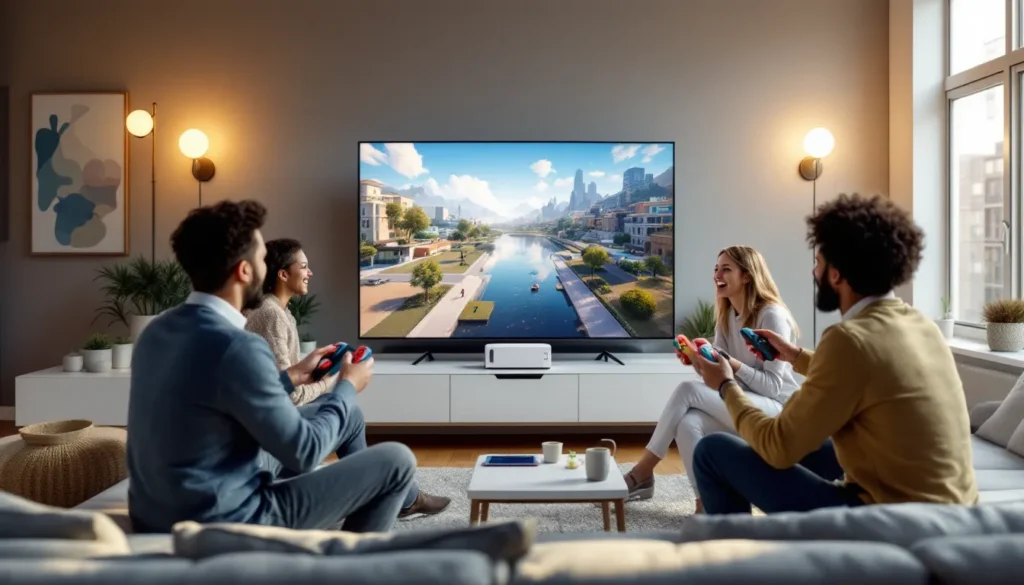
Nintendo has built its empire on a simple truth: gaming is better with friends. Whether you’re passing Joy-Cons on a couch, screaming at your sibling over a blue shell in Mario Kart, or coordinating raid strategies online, Nintendo’s multiplayer catalog remains unmatched for sheer variety and accessibility. In 2026, the Switch continues to lead as the go-to platform for shared experiences, from party chaos to tactical co-op.
This guide breaks down the best Nintendo multiplayer games across every category, local party games, online competitive shooters, family-friendly adventures, and underrated gems that deserve your attention. We’ll cover what makes Nintendo’s approach to multiplayer special, how to set up the perfect session, and what’s on the horizon for the platform. Whether you’re hosting a weekend gaming marathon or looking for your next online obsession, this is your roadmap.
Key Takeaways
- Nintendo multiplayer games dominate because the Switch’s hybrid design and included Joy-Con controllers enable seamless local co-op without requiring additional hardware purchases.
- Splatoon 3 leads Nintendo’s competitive shooter ecosystem with ranked modes, seasonal tournaments, and regular balance updates that keep the esports scene thriving alongside casual players.
- Local multiplayer standouts like Mario Party Superstars, Overcooked, Luigi’s Mansion 3, and Super Smash Bros. Ultimate offer both accessible party fun and high skill ceilings for competitive players.
- Family-friendly titles such as Pokémon Scarlet and Violet, Animal Crossing: New Horizons, and Nintendo Switch Sports accommodate mixed-age groups without compromising depth for experienced players.
- Online performance varies by connection type—wired Ethernet adapters significantly reduce lag for competitive play, while Nintendo’s voice chat limitations force many groups to use Discord as a workaround.
- Future Nintendo multiplayer experiences will benefit from next-generation hardware supporting higher frame rates and potential improved online infrastructure, though the platform’s core design philosophy of accessible, inclusive gaming will remain unchanged.
Why Nintendo Dominates the Multiplayer Gaming Landscape
Nintendo’s multiplayer philosophy is refreshingly different. While other platforms chase photorealistic graphics and hyper-competitive ranked modes, Nintendo focuses on lowering barriers to entry. The Switch’s hybrid design makes it the only console where you can seamlessly transition from TV play to tabletop mode with built-in controllers for impromptu multiplayer sessions.
The Joy-Con design is genius for this. Each half functions as a standalone controller, meaning every Switch owner has two controllers out of the box. No other console ships ready for local multiplayer by default. This design choice has revived couch co-op at a time when most AAA studios abandoned split-screen entirely.
Nintendo also understands demographic breadth. Their multiplayer games range from accessible party titles like Mario Party Superstars to hardcore competitive experiences like Splatoon 3, which boasts a thriving esports scene with seasonal tournaments and meta shifts that rival any shooter on the market. The Splatoon 3 Version 6.0 update in late 2025 rebalanced weapon kits and introduced new ranked modes, keeping the competitive community engaged years after launch.
Cross-generational appeal matters too. A grandparent can pick up Ring Fit Adventure’s co-op mode or Animal Crossing’s island visits without feeling overwhelmed, while competitive players grind ranked ladders in Smash Ultimate or Tetris 99. Nintendo’s first-party titles prioritize readability and intuitive mechanics over complexity, which keeps skill floors low while maintaining high skill ceilings.
Best Local Multiplayer Games for Nintendo Switch
Local multiplayer is where the Switch truly shines. The console’s portability and controller flexibility make it the undisputed champion of same-room gaming in 2026.
Party Games That Bring Everyone Together
Mario Party Superstars (supports 4 players locally) remains the gold standard for party boards. Unlike Super Mario Party, Superstars features classic N64 boards with refined rulesets and 100 minigames pulled from the series’ peak era. Board length is customizable from 10 to 30 turns, making it perfect for quick sessions or marathon grudge matches.
Super Mario Party Jamboree, released in October 2024, added seven new boards and 110+ minigames with improved motion control calibration. The game supports up to 4 players locally with a single Joy-Con each, and the new “Kaboom Squad” mode introduces cooperative bomb-defusal challenges that demand actual teamwork instead of button-mashing luck.
Overcooked. All You Can Eat (1-4 players) and Moving Out 2 (1-4 players) define chaotic co-op. Both games escalate from simple task management to absolute pandemonium as communication breaks down and kitchens catch fire. Moving Out 2’s physics-based furniture moving adds cross-platform online play, but local couch chaos is where it peaks.
WarioWare: Move It. leverages the Joy-Con gyroscopes for absurd micro-game challenges. With support for up to 4 players and rounds that last under 10 seconds each, it’s perfect for groups with short attention spans or as a warmup before longer sessions.
Cooperative Adventures for Close-Knit Teams
Luigi’s Mansion 3 offers seamless 2-player co-op throughout the entire 15-hour campaign. Player two controls Gooigi, Luigi’s goo-based doppelgänger, who can slip through barriers and access alternate paths. The puzzle design genuinely requires coordination rather than treating player two as a glorified spectator.
Kirby and the Forgotten Land (2-4 players) brought 3D platforming to the pink puffball with drop-in/drop-out co-op. Player two controls Bandana Waddle Dee, who’s surprisingly viable with spear combos that rival Kirby’s copy abilities. The post-game modes increase difficulty significantly, making full party coordination essential.
It Takes Two finally hit Switch in March 2025 via cloud streaming through Nintendo Switch Online + Expansion Pack. While the cloud requirement is a dealbreaker for some, the co-op design remains genre-defining, with mechanics that constantly evolve and demand genuine partner communication.
Minecraft Dungeons supports 4-player local co-op with vertical split-screen. The game’s loot systems and difficulty scaling (up to Apocalypse +25 in the 2025 update) provide surprising depth for a family-friendly dungeon crawler. Cross-save with other platforms lets teams continue progress anywhere.
Competitive Titles for Intense Couch Battles
Super Smash Bros. Ultimate remains the definitive platform fighter. With 89 characters (post-final DLC), tournament-legal stages, and frame-perfect combat, it serves casual button-mashers and competitive players equally well. Local tournaments support 8-player Smash on compatible stages, though competitive play sticks to 1v1 or 2v2 formats.
The game’s balance patch 13.0.3 in September 2025 adjusted Kazuya and Steve’s most oppressive combos, but both remain top-tier picks. Competitive tournaments still draw massive viewership, with Genesis 10 in January 2026 hitting 200K concurrent Twitch viewers.
Mario Kart 8 Deluxe continues its reign with the Booster Course Pass adding 48 remastered tracks through Wave 6, which concluded in late 2023. The final roster stands at 96 tracks across 16 cups, making it the largest Mario Kart ever. Local wireless play supports 8 players with multiple Switch consoles, while single-console play maxes at 4-player split-screen.
The meta still favors Waluigi/Wiggler on the Biddybuggy/Roller combo for optimal speed and handling, though anti-gravity sections reward experimentation. The addition of Nintendo Switch shooter games has diversified competitive options, but Mario Kart’s accessibility keeps it dominant for mixed-skill groups.
Tetris 99 technically focuses on online battle royale, but local wireless arena mode (unlocked via DLC) supports private 8-player lobbies. The targeting system, letting players send garbage lines to attackers, badge holders, or random opponents, adds strategic depth beyond pure Tetris skill.
Rocket League remains free-to-play with cross-platform support. Local split-screen supports up to 4 players in exhibition matches or even ranked playlists if the skill disparity isn’t too wild. The physics-based car soccer translates perfectly to party settings, with a skill ceiling high enough to support a professional esports ecosystem.
Top Online Multiplayer Experiences on Nintendo Platforms
Nintendo’s online infrastructure has historically lagged behind PlayStation Network and Xbox Live, but the Switch’s library compensates with quality over features.
Battle Royale and Competitive Shooters
Splatoon 3 (launched September 2022) dominates as Nintendo’s premier competitive shooter. Version 6.1.0 in February 2026 rebalanced Tri-Stringer charge time and nerfed Crab Tank special duration, shifting the meta toward mobility-focused weapons. Ranked modes now include Splat Zones, Tower Control, Rainmaker, and Clam Blitz across 20+ maps with seasonal rotations.
The game supports cross-region matchmaking, though latency can affect trades in high-level play. Splatfests drive weekend engagement with theme-based team battles that impact lore outcomes. The February 2026 Splatfest, Time Travel vs. Teleportation, drew 3.2 million participants according to reports from Nintendo Life.
Fortnite remains fully featured on Switch with cross-platform play, though performance caps at 30fps compared to 60fps+ on other platforms. Chapter 5 Season 2 introduced ridable creatures and reworked the weapon pool, maintaining the game’s relevance into 2026. The Switch version supports gyro aiming, giving skilled players a competitive edge over traditional stick aim.
Apex Legends hit Switch in March 2021 and still receives simultaneous updates with other platforms. Season 22 in early 2026 added Legend Catalyst reworks and the new Storm Point map rotation. Performance runs at 30fps with adaptive resolution, making long-range tracking challenging but close-quarters combat remains viable.
Warframe runs surprisingly well on Switch even though being a free-to-play MMO shooter with complex systems. Whispers in the Walls update (December 2023) added the Sanctum Anatomica tileset, and cross-save lets players maintain progress across PC and consoles. Gyro aiming support makes precision viable even in endgame content.
MMO and Persistent Online Worlds
Animal Crossing: New Horizons pioneered pandemic-era social gaming and remains active in 2026. Island visits support up to 8 players simultaneously, while the 2.0 update in November 2021 added Brewster’s café and expanded customization options. The game’s asynchronous multiplayer, leaving messages, trading items via Nookazon, creates persistent social connections without demanding real-time coordination.
Monster Hunter Rise: Sunbreak elevated the base game with Master Rank hunts and Anomaly Quests that scale to 4-player difficulty. Title Update 6 in April 2024 added Risen Elder Dragons with near-endgame challenge levels. Matchmaking supports specific quest targeting, and the Switch version maintains cross-save with PC via Steam, letting hunters continue progress between platforms.
Phantasy Star Online 2: New Genesis offers a true MMO experience on Switch with persistent zones supporting dozens of simultaneous players. Combat blends real-time action with light MMO hotbar management, and seasonal events drive log-in engagement. Performance dips in crowded hub areas but stabilizes in instanced combat zones.
Minecraft supports cross-platform Realms subscriptions (up to 11 players simultaneously) and local wireless for up to 8 Switch consoles. The 1.21 update in mid-2025 added crafter blocks and new mob variants, keeping the survival sandbox fresh. Competitive minigame servers like Hive and Lifeboat remain popular for quick PvP sessions.
Family-Friendly Multiplayer Games for All Ages
Nintendo’s family-friendly reputation isn’t marketing fluff, it’s baked into game design philosophy. These titles accommodate mixed ages and skill levels without patronizing experienced players.
Pokémon Scarlet and Violet introduced true open-world co-op in the series’ mainline entries. Up to 4 players can explore Paldea simultaneously via Union Circle, completing raids and trading in real-time. Tera Raid Battles scale to 4-player difficulty with type-specific mechanics, and the 7-star raids demand actual team composition and strategy. The Hidden Treasure of Area Zero DLC (concluded December 2023) added endgame content that respects player time investment.
Nintendo Switch Sports updated the Wii Sports formula with online matchmaking and pro leagues. Soccer, volleyball, tennis, bowling, badminton, and golf support local and online play, with motion controls that genuinely register skill differences. The game’s ranked modes prevent complete mismatches, making it viable for families where skill levels vary wildly.
Pico Park (1-8 players locally or online) demands perfect coordination through 48 levels of puzzle-platforming. Each player controls an identical cat character, and solutions require synchronized jumping, key management, and spatial awareness. It’s surprisingly difficult, making success genuinely rewarding even for younger players who contribute meaningfully.
Captain Toad: Treasure Tracker added 2-player co-op in the Switch version, where player two controls a cursor to stun enemies and reveal hidden items. It’s an asymmetric design that lets less experienced players contribute without complex controls, perfect for parent-child sessions.
Just Dance 2025 released in November 2024 with 40 new tracks and updated choreography. The Switch version uniquely supports Joy-Con tracking without requiring a camera peripheral, making setup trivial. Multiplayer supports up to 6 dancers with additional controllers, and the game’s song variety spans generations from ABBA to current chart-toppers.
Accessing online play requires effective communication tools, though Nintendo’s friend-code system and limited voice chat options remain frustratingly archaic compared to Discord integration that many players use as a workaround.
Classic Nintendo Franchises Built for Multiplayer
Nintendo’s legacy franchises didn’t just adapt to multiplayer, many were designed around it from the beginning.
Mario Series Multiplayer Games
Super Mario Bros. Wonder (October 2023) brought 4-player chaos to 2D Mario with online multiplayer for the first time in a mainline side-scroller. The “Wonder” mechanics, reality-warping stage transformations, create unpredictable moments that rival party game absurdity while maintaining tight platforming. Online play includes matchmaking and private lobbies, with ghost data appearing even in single-player modes.
Super Mario 3D World + Bowser’s Fury remains essential, offering 4-player co-op through the entire 3D World campaign plus the open-world Bowser’s Fury expansion. Character selection matters, Peach’s float trivializes some challenges while Toad’s speed enables sequence breaks. The game rewards both cooperation and competitive point-chasing, letting groups decide their own playstyle.
Mario Strikers: Battle League revived the soccer spinoff with online clubs (up to 20 members) competing in seasonal leagues. Gear customization affects stats, creating light meta-gaming around optimal builds. The game’s hyper-aggressive design, no fouls, power-ups, and special shots, makes matches feel like arcade chaos rather than simulation sports.
New Super Mario Bros. U Deluxe offers classic 4-player side-scrolling with Nabbit and Toadette as easier character options for struggling players. It’s mechanically solid but feels dated compared to Wonder’s innovations. Still valuable for households with younger kids who need gentler difficulty curves.
The Legend of Zelda Co-Op Experiences
The Zelda franchise traditionally focuses on solo adventures, but recent entries experimented with multiplayer.
The Legend of Zelda: Tears of the Kingdom remains single-player only, but its construction mechanics inspired countless shared challenges and speedrun competitions. While not technically multiplayer, the community-driven puzzle-solving creates a social metagame.
Cadence of Hyrule: Crypt of the NecroDancer supports 2-player local co-op in the rhythm-roguelike hybrid. Both players navigate to the beat simultaneously, and death is permanent per run. It’s niche but brilliant for musically inclined players who can maintain rhythm under pressure.
The classic The Legend of Zelda: Tri Force Heroes (3DS, 2015) hasn’t received a Switch port, leaving Zelda co-op underserved in the current generation. Many fans hope for a Four Swords revival, especially given the Switch’s perfect form factor for it.
Pokémon Competitive and Cooperative Play
Pokémon’s multiplayer ecosystem spans casual trading, co-op raids, and hardcore competitive battling.
Pokémon Scarlet and Violet VGC (Video Game Championships) format for 2026 uses Regulation H ruleset, restricting specific legendary Pokémon and requiring team diversity. The ranked ladder resets seasonally, and top players compete in regional championships leading to Worlds. The meta currently favors Flutter Mane, Rillaboom, and Incineroar according to usage stats from Pikalytics, though shifts occur with each balance patch.
Tera Raid Battles offer PvE multiplayer for up to 4 players, with 5-star and 7-star raids requiring optimized builds and type coverage. Event raids featuring shiny legendaries or exclusive move sets drive weekend engagement spikes.
Pokémon Unite remains Nintendo’s only MOBA, with 5v5 matches lasting 10 minutes. The game launched in July 2021 and receives regular balance patches and new character releases. Recent additions like Miraidon (January 2026) shake up the meta, though the game’s pay-to-progress mechanics remain controversial. Cross-platform play with mobile ensures healthy matchmaking queues.
Pokémon Café ReMix offers asynchronous co-op through order-sharing mechanics, making it more social puzzle game than competitive multiplayer. It’s perfect for casual Pokémon fans who want franchise theming without battle complexity.
Hidden Gems: Underrated Nintendo Multiplayer Titles Worth Playing
Beyond the blockbuster franchises, the Switch library hides exceptional multiplayer experiences that deserve more attention.
Boomerang Fu (2-6 players locally) distills arena combat to its purest form: throw boomerangs, slice opponents, survive. Matches last 90 seconds, power-ups stack absurdly (teleporting explosive boomerangs that freeze on impact), and the minimalist visuals ensure perfect readability during chaos. It’s $15, runs flawlessly, and delivers more laughs per minute than games ten times its budget.
Unrailed. (1-4 players local/online) demands relentless coordination as players gather resources, lay train tracks, and avoid crashes across procedurally generated biomes. The difficulty escalates mercilessly, and success requires role specialization and flawless communication. It’s cooperative perfection hidden behind humble voxel graphics.
Heave Ho (1-4 players) controls like QWOP meets platforming. Each player controls two arms independently, grabbing ledges and teammates to navigate hazards. Physics-based fumbling creates emergent comedy, and the game’s 20+ levels escalate from simple swinging to multi-person chain coordination.
Pode offers gentle 2-player puzzle-solving in a gorgeous low-poly art style. One player controls a rock, the other a star, each with complementary abilities needed to progress. It’s non-violent, stress-free, and perfect for introducing gaming to non-gamers. The Norway-based developer Henchman & Goon designed it specifically for parent-child play.
Cuphead (1-2 players local or online) brought 1930s animation aesthetics to brutally difficult boss battles. The DLC expansion “The Delicious Last Course” (June 2022) added Ms. Chalice as a playable character with unique abilities. Co-op slightly reduces difficulty by allowing revives, but bosses still demand pattern memorization and precise execution.
Death Squared presents 80 co-op puzzle chambers where colored cubes must reach matching goals without triggering traps. The game deliberately creates scenarios where players inadvertently kill each other, leading to hilarious blame-shifting. Party mode supports 4 players with increased chaos.
Pode 2 released in late 2024, expanding on the original’s gentle puzzles with enhanced visuals and new mechanics. It maintains the franchise’s commitment to accessibility while deepening the gameplay systems for returning players.
For those exploring deeper into Nintendo’s retro catalog, classics like GoldenEye 007 and Mario Kart 64 defined N64-era multiplayer, and their influence echoes through modern designs.
Setting Up the Perfect Multiplayer Session
Hardware and subscription choices directly impact the multiplayer experience. Here’s what actually matters.
Controller Options and Configurations
The Switch supports multiple controller configurations, each with trade-offs:
Joy-Cons (included): Each half functions as a standalone controller, instantly enabling 2-player sessions. The side-mounted SL/SR buttons feel cramped during extended play, and the tiny analog sticks aren’t ideal for precision aiming. Gyro aiming works well in supported games like Splatoon 3.
Pro Controller ($69.99): The gold standard for serious play. Full-sized buttons, proper D-pad, excellent ergonomics, and 40-hour battery life. Gyro support makes it viable for competitive shooters. Tournaments often require Pro Controllers for consistency.
GameCube Controller via adapter ($19.99 adapter, controllers $30-50): Still preferred by Smash Ultimate competitive players for its octagonal gate that simplifies input precision. Third-party adapters work fine, but the official Nintendo adapter supports 4 controllers with rumble and all buttons functional. Those committed to competitive Smash should explore GameCube controller options for optimal performance.
Third-party options: PowerA, HORI, and 8BitDo offer budget alternatives ($25-45). Build quality varies, and some lack NFC or gyro support. The 8BitDo Pro 2 includes customizable button mapping and works across PC/Switch/Android, making it excellent for multi-platform gamers.
Split Joy-Con grip ($15-20 third-party): Makes dual Joy-Con play more comfortable for extended sessions without buying extra controllers.
For most households, two Pro Controllers plus the included Joy-Cons provide enough hardware for 4-player sessions without discomfort. Budget-conscious players can mix one Pro Controller with Joy-Cons and prioritize the Pro for games requiring precision.
Audio presents challenges for online play. While many competitive players prefer wireless headset options for clear communication, Nintendo’s voice chat remains locked to the Nintendo Switch Online smartphone app, forcing many groups to use Discord instead.
Nintendo Switch Online: Features and Benefits
Nintendo Switch Online comes in two tiers:
Individual membership ($19.99/year, $3.99/month):
- Online multiplayer access for supported games
- Cloud saves for most games (notable exceptions: Splatoon 3, Pokémon, Animal Crossing)
- NES and SNES app with 100+ classic titles, some with added online multiplayer
- Exclusive offers and discounts
Family membership ($34.99/year):
- Covers up to 8 Nintendo Accounts across multiple Switch consoles
- Same features as individual
- Massive value for households with multiple players
Expansion Pack ($49.99/year individual, $79.99/year family):
- Everything from base tier
- Nintendo 64 and Genesis app libraries
- Mario Kart 8 Deluxe Booster Course Pass
- Animal Crossing: Happy Home Paradise DLC
- Splatoon 2: Octo Expansion DLC
- Select cloud gaming titles (Resident Evil, Kingdom Hearts series)
The Expansion Pack justifies its cost only if you actively use the DLC or N64 library. For most players, the base family plan offers better value.
Online performance varies by game. Splatoon 3 and Mario Kart 8 use Nintendo’s dedicated servers with generally stable connections. Smash Ultimate and Monster Hunter Rise use peer-to-peer connections, making match quality dependent on player internet quality. Wired Ethernet adapters ($15-25) significantly reduce lag compared to Wi-Fi, especially for competitive play.
Voice chat remains awkward. The smartphone app supports Splatoon 3 and select games, but most players use Discord on secondary devices. Some third-party headsets include aux splitters to blend game audio with phone-based Discord, but it’s an inelegant solution. Japanese gaming coverage from Gematsu has indicated Nintendo may finally be developing native voice chat for the Switch’s successor, but nothing is confirmed as of March 2026.
What’s Next for Nintendo Multiplayer Gaming
Nintendo’s next hardware generation is imminent, though official announcements remain scarce as of March 2026. Industry analysts expect a “Switch 2” reveal by mid-2026 with holiday availability, likely maintaining backward compatibility while boosting performance to match Steam Deck/PS5 capabilities.
Backward compatibility would be huge for multiplayer. The existing Switch library of 4,000+ games includes hundreds of multiplayer titles that would benefit from improved frame rates and resolution. Splatoon 3 running at 60fps on new hardware would fundamentally change competitive viability, and Mario Kart 8’s already gorgeous tracks would shine at native 4K.
First-party multiplayer titles in development or rumored include:
Metroid Prime 4: Beyond (2025 release window) remains single-player focused based on the June 2024 trailer, but the Prime series has historically included competitive multiplayer modes. If Prime 4 includes online deathmatch with the refined FPS controls showcased in previews, it could challenge Splatoon’s dominance in Nintendo’s shooter space.
Mario Kart 9 or Mario Kart 8 Deluxe 2 speculation intensifies as MK8D ages. The franchise typically spans one entry per console generation, but the Switch’s extended lifespan and the Booster Course Pass’s completion suggest development on a successor is underway. Expect announcements tied to new hardware.
Splatoon 4 won’t arrive for years given Splatoon 3’s active support through 2026, but the franchise’s 3-year development cycle suggests planning is underway. Potential features include expanded Salmon Run variations, new weapon classes beyond the current shooters/rollers/chargers/sloshers/blasters/brushes/dualies/brellas/splatlings/stringers/splatanas, and reworked ranked progression.
New multiplayer IP from Nintendo EPD remains possible. The company’s willingness to experiment (Ring Fit Adventure, Nintendo Labo, Nintendo Switch Sports) suggests other innovative multiplayer concepts are in development. Patents filed in late 2025 hint at enhanced motion tracking beyond Joy-Con capabilities, potentially enabling more complex physical gaming.
Third-party support will define whether Nintendo’s next platform competes for multiplayer dominance. The Switch missed major titles like Call of Duty and Battlefield due to hardware limitations. More powerful hardware could change this, though whether Activision or EA prioritize Nintendo platforms post-Microsoft acquisition remains uncertain.
Cross-platform play will be essential. Games like Fortnite, Rocket League, and Minecraft prove Nintendo can enable cross-play when publishers push for it. Future first-party titles adopting this as standard would massively benefit matchmaking populations and friend group flexibility.
According to updates tracked by Siliconera, Japanese developers continue strong Switch support with multiplayer-focused titles. Monster Hunter Stories 3, Dragon Quest XII, and potential new Taiko no Tatsujin entries suggest the platform remains vital for the Japanese market regardless of global hardware cycles.
Conclusion
Nintendo’s multiplayer ecosystem in 2026 is unmatched for accessibility and variety. The Switch’s hybrid design, built-in controllers, and massive library spanning party games to competitive shooters make it essential for anyone who values shared gaming experiences. Whether you’re organizing local tournaments, coordinating online raids, or just trying to keep the kids entertained on a rainy afternoon, Nintendo offers options.
The platform’s true strength isn’t technical specs, it’s design philosophy. Nintendo builds games that lower barriers to entry without sacrificing depth, creating spaces where grandparents and grandkids, casual players and esports professionals, can all find something that works. That inclusivity, combined with a first-party catalog that rivals any publisher, cements Nintendo’s position at the center of multiplayer gaming.
As the platform transitions toward next-generation hardware, the fundamentals that make Nintendo multiplayer special, intuitive controls, creative design, and respect for player time, will remain. The next chapter promises higher fidelity and potentially better online infrastructure, but the core philosophy of gaming as a shared, joyful experience isn’t changing. That’s why Nintendo multiplayer experiences will continue dominating living rooms and friend groups for years to come.