
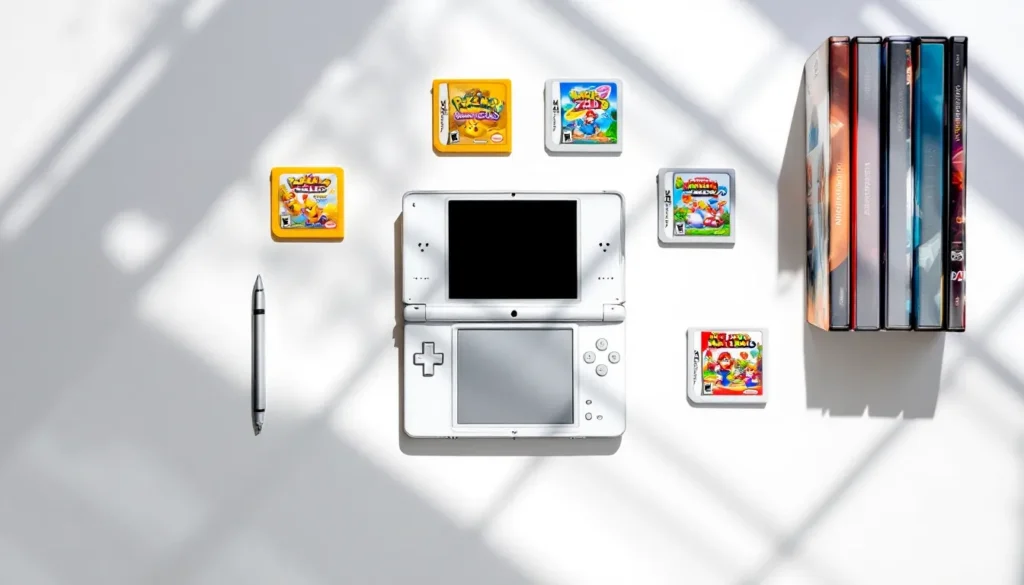
The Nintendo DS didn’t just dominate handheld gaming, it redefined it. With over 154 million units sold worldwide, the dual-screen wonder delivered some of the most innovative, memorable, and downright addictive games ever squeezed into a portable device. Nearly two decades after launch, these titles still hold up remarkably well, whether you’re firing up original hardware, a DS Lite, or exploring modern preservation methods.
What makes the DS library special isn’t just nostalgia. It’s the sheer variety and quality packed into those tiny cartridges. Touch controls, microphone inputs, and dual screens pushed developers to experiment in ways that felt genuinely fresh. The result? A catalog spanning genre-defining RPGs, brain-teasing puzzlers, platforming masterpieces, and experimental gems that never got the spotlight they deserved.
This collection highlights the absolute best Nintendo DS games across every genre. Whether you’re revisiting childhood favorites or discovering these classics for the first time, these titles represent the peak of what Nintendo’s handheld powerhouse delivered.
Key Takeaways
- The best Nintendo DS games span multiple genres—from RPGs like Pokémon HeartGold to platformers like New Super Mario Bros—proving the console’s ability to deliver diverse, high-quality experiences.
- Nintendo DS games revolutionized handheld gaming through innovative touchscreen and dual-screen mechanics that enabled experiences like stylus-based Zelda gameplay, tile-drawing in Picross, and rhythm-based rhythm games that feel as fresh today as they did at launch.
- Hidden gems like Radiant Historia and Elite Beat Agents deserve equal recognition alongside Mario and Zelda franchises, showcasing the DS’s experimental spirit and unique hardware that produced unforgettable experiences impossible on other platforms.
- Original DS hardware remains affordable ($50-150 for DS Lite or backward-compatible 3DS models) and paired with preservation methods like emulation, the entire Nintendo DS library stays fully accessible in 2026.
- Timeless design rather than nostalgia explains why the best Nintendo DS games still hold up against modern releases, with titles like The World Ends with You and Mario Kart DS maintaining tight mechanics and engaging gameplay decades later.
What Made the Nintendo DS a Revolutionary Handheld Console
The DS arrived in 2004 with a bold premise: two screens, touch controls, and wireless connectivity in a clamshell design. Critics initially questioned whether the dual-screen gimmick would stick. Spoiler: it did.
The bottom touchscreen opened gameplay possibilities that simply didn’t exist on Game Boy Advance or PSP. Drawing maps in Zelda, petting your Nintendogs, performing surgery in Trauma Center, these interactions felt tactile and immediate. The microphone added another layer, enabling voice commands and rhythm games that responded to your actual breath.
Backward compatibility with GBA cartridges meant instant access to hundreds of existing titles. The DS also pioneered Download Play, letting friends join multiplayer sessions with just one game cartridge. Mario Kart DS lobbies didn’t require everyone to own a copy, just one player could share the experience wirelessly.
The hardware evolved through several iterations. The DS Lite refined the design with brighter screens and better ergonomics. The DSi added cameras and an SD card slot, though it ditched the GBA slot. The DSi XL brought supersized screens for players who wanted more real estate. Each version maintained full compatibility with the core DS library, ensuring games worked across the entire family of devices.
Developers embraced the platform’s quirks. Publishers from Nintendo, Square Enix, Atlus, Konami, and smaller studios delivered experimental titles that leveraged unique hardware features. The DS didn’t just iterate on handheld gaming, it challenged assumptions about what portable experiences could be.
Top Action and Adventure Games for Nintendo DS
The Legend of Zelda: Phantom Hourglass
Phantom Hourglass proved that stylus-only controls could work for a flagship Nintendo franchise. Released in 2007 as a direct sequel to Wind Waker, the game translated Link’s ocean-faring adventures to dual screens with surprising elegance.
Movement, combat, and puzzle-solving all happened through touch. Tap where you want Link to move, slash enemies with quick swipes, draw the path for your boomerang. The Temple of the Ocean King served as the game’s central dungeon, introducing time-based exploration that players either loved or found repetitive. Boss battles demanded creative stylus use, drawing specific patterns or exploiting environmental weaknesses.
The sailing mechanics simplified Wind Waker’s ocean traversal while maintaining that sense of exploration. Charting courses, customizing your ship, and discovering islands kept the overworld engaging. The Spirit Tracks sequel followed in 2009 with trains instead of boats, though many fans consider Phantom Hourglass the stronger of the two DS Zelda entries.
Castlevania: Dawn of Sorrow
Konami delivered one of the DS’s earliest killer apps in 2005 with this direct sequel to Aria of Sorrow. Dawn of Sorrow refined the Metroidvania formula with gorgeous sprite work, tight combat, and a sprawling castle begging to be explored.
The Tactical Soul system let Soma Cruz absorb enemy souls, granting new abilities and attacks. Collecting souls became addictive, each enemy dropped different powers with varying drop rates. Some granted passive stat boosts, others unleashed devastating special attacks. The weapon variety encouraged experimentation, from rapiers and greatswords to guns and exotic magic items.
Touch controls integrated through the Magic Seal system, requiring players to quickly trace patterns during boss fights. It added tension but felt slightly gimmicky compared to the otherwise traditional gameplay. The castle design remained brilliant, with interconnected areas revealing shortcuts and secrets as you gained new abilities.
Portrait of Ruin (2006) and Order of Ecclesia (2008) continued the DS Castlevania legacy, but Dawn of Sorrow set the standard.
Grand Theft Auto: Chinatown Wars
Rockstar shocked everyone by delivering a legitimate GTA experience on Nintendo hardware in 2009. Chinatown Wars embraced a top-down perspective reminiscent of early GTA titles while packing in modern mission variety, storytelling, and chaos.
The touch controls enhanced the experience rather than hampering it. Hot-wiring cars required screwdriver rotations on the touchscreen. Molotov cocktails lit via the microphone. Drug dealing became a surprisingly deep minigame involving buying low and selling high across Liberty City. The wanted system retained that classic GTA escalation, cause enough mayhem and the police response becomes overwhelming.
Mission design stayed varied and creative. Escort missions, timed chases, assassination contracts, and gang warfare kept the 50+ story missions fresh. Side content included rampages, taxi fares, and paramedic runs. The GPS navigation system made finding objectives simple, addressing one of the franchise’s historical pain points.
Graphically, Chinatown Wars looked clean and detailed even though hardware limitations. The cel-shaded aesthetic and smooth framerate proved that technical prowess mattered less than smart design choices. This wasn’t a watered-down port, it was a purpose-built GTA designed for handheld play sessions.
Best RPGs That Defined the DS Era
Pokémon HeartGold and SoulSilver
Game Freak’s 2010 remakes of Gold and Silver represent peak Pokémon. HeartGold and SoulSilver took everything beloved about the Johto region and enhanced it with modern mechanics, stunning sprite work, and the Pokéwalker accessory that let players level Pokémon while walking in real life.
The core journey through Johto followed the classic template: eight gym badges, Team Rocket shenanigans, legendary encounters with Ho-Oh or Lugia. The post-game Kanto region doubled the content, offering another eight badges and rematches with Red atop Mt. Silver. This dual-region structure remains one of the series’ most generous offerings.
Your lead Pokémon followed you around on the overworld, a feature fans still request in modern entries. The touchscreen menus streamlined navigation and battle commands. The Battle Frontier provided endgame challenge for competitive players. Physical and special split mechanics (introduced in Gen IV) made team building more strategic than ever.
Many consider these the definitive Pokémon experience. The balance of nostalgia, mechanical depth, and post-game content creates an RPG that easily clocks 100+ hours. Competitive players still reference HGSS metagame strategies when discussing battle formats and tier rankings.
Dragon Quest IX: Sentinels of the Starry Skies
Square Enix took a risk making Dragon Quest IX multiplayer-focused, but the gamble paid off spectacularly. Released in 2010, DQIX featured full character customization, class-based progression, and hundreds of hours of quests designed for both solo and cooperative play.
The vocation system let players switch between warrior, mage, priest, thief, and more advanced classes. Skill points distributed across weapon types and class-specific abilities encouraged experimentation. Grinding became strangely satisfying as you worked toward unlocking powerful abilities and equipment.
The main story followed a celestial guardian turned mortal, exploring themes of faith and duty across a vibrant fantasy world. Side quests numbered in the hundreds, ranging from fetch quests to elaborate multi-step investigations. Post-game legacy bosses provided brutal challenges for optimized parties.
Tag Mode enabled passive multiplayer, leaving your DS in sleep mode could connect with other players’ data, exchanging treasure maps and guest characters. Local co-op let up to four players tackle dungeons and bosses together, though it required everyone to own a copy.
The World Ends with You
Square Enix’s 2008 masterpiece remains one of the DS’s most unique RPGs. Set in a stylized Shibuya district, TWEWY combined urban Japanese culture with supernatural combat, fashion-based progression, and one of the most innovative battle systems ever designed for dual screens.
Combat happened simultaneously on both screens. The top screen controlled your partner via D-pad inputs, building combos through timing and pattern recognition. The bottom screen featured protagonist Neku fighting with psychs, pin-based abilities activated through touch gestures. Slashing enemies, tapping weak points, dragging fire trails, shouting into the mic, different pins required different inputs.
Managing both screens at once felt overwhelming initially but clicking into flow state during battles became incredibly satisfying. The fusion system rewarded synced attacks between screens, dealing massive damage when both characters acted in harmony.
The fashion system tied equipment stats to brand popularity in each district. Wearing trendy gear in the right area boosted effectiveness. The modern soundtrack blended J-pop, hip-hop, and rock into something genuinely memorable. Story beats hit hard, exploring themes of isolation, connection, and self-worth through time loop mechanics and character growth.
TWEWY never achieved mainstream success but earned a devoted cult following. A Switch sequel, NEO: The World Ends with You, finally arrived in 2021, proving the franchise’s lasting impact.
Must-Play Puzzle and Strategy Games
Professor Layton Series
Level-5’s gentleman detective franchise launched in 2007 with Professor Layton and the Curious Village, kicking off one of the DS’s most charming series. Each entry blended puzzle-solving with mystery storytelling, wrapped in gorgeous hand-drawn art and British sensibilities.
The puzzles ranged from logic problems and spatial reasoning to math challenges and lateral thinking exercises. Difficulty varied wildly, some stumped players for ages while others resolved in seconds. The hint coin system provided graduated assistance without outright solving puzzles, maintaining that satisfying “aha.” moment.
The narrative hook kept players invested. Villages with dark secrets, mechanical conspiracies, ancient curses, each game delivered a self-contained mystery with satisfying twists. Voice acting and animated cutscenes added production value rare for DS titles. The sequels (Diabolical Box, Unwound Future, Last Specter, Miracle Mask, Azran Legacy) maintained quality while expanding the lore.
Daily downloadable puzzles extended the experience post-launch. Bonus content unlocked through puzzle completion included minigames and character profiles. The series spawned a multimedia franchise including an anime film and manga adaptation.
Advance Wars: Dual Strike
Intelligent Systems brought their turn-based tactics franchise to DS in 2005, and Dual Strike immediately became essential for strategy fans. The core gameplay loop, capturing bases, building units, leveraging terrain, exploiting unit matchups, translated perfectly to dual-screen tactical warfare.
The Tag System let two COs (commanding officers) fight together, alternating turns and combining CO Powers for devastating effects. Each CO brought unique abilities and stat modifiers. Choosing the right pairing for each mission became part of the strategic puzzle. Eagle’s aerial focus complemented Sami’s infantry specialization. Colin’s budget units synergized with Kanbei’s expensive powerhouses.
Campaign missions introduced creative objectives beyond simple enemy elimination. Fog of war maps, timed missions, survival challenges, and puzzle-like battles kept the 30+ missions varied. The difficulty ramped up significantly in later stages, demanding perfect unit positioning and resource management.
Multiplayer supported both local wireless and hotseat modes. Custom map creation with the built-in editor enabled infinite replayability. War Room mode provided standalone challenge maps testing tactical mastery.
The sequel Days of Ruin (2008) took a darker tone and rebalanced gameplay, though many fans still prefer Dual Strike’s colorful presentation and roster variety.
Picross DS
Nintendo’s 2007 puzzle game took the Japanese nonogram format and delivered over 300 puzzles with perfect touchscreen implementation. Picross (picture crossword) presents grids where number clues indicate consecutive filled squares in each row and column. Solving reveals pixel art.
The touchscreen made filling squares intuitive, tap to fill, press and drag for longer sequences, mark confirmed empty spaces with X’s. The stylus precision eliminated the frustration of cursor-based puzzle games. Free mode removed time limits and penalties, while standard mode challenged players to solve quickly without mistakes.
Puzzle sizes ranged from simple 5×5 grids to complex 25×20 marathons. Unlockable content included daily Picross puzzles and even more challenging variations. The wireless multiplayer let players compete for fastest solve times.
The addictive loop of “just one more puzzle” made Picross DS dangerously binge-worthy. The satisfaction of watching pictures emerge from logical deduction tapped into the same reward centers as Sudoku or crosswords. Nintendo later released Picross 3D, adding depth to the formula with volumetric puzzles.
Standout Platformers and Side-Scrollers
New Super Mario Bros.
Nintendo’s 2006 return to 2D Mario revitalized the franchise after years of 3D focus. New Super Mario Bros. balanced classic gameplay with modern polish, introducing mechanics that would define subsequent entries while respecting the formula that made the originals legendary.
The core platforming felt immediately familiar, run, jump, stomp enemies, grab power-ups. The Mega Mushroom grew Mario to screen-filling size, letting him smash through pipes and enemies alike. The Mini Mushroom shrunk Mario tiny, enabling access to small passages and higher jumps off water surfaces. Blue shells offered protective sliding attacks.
Level design struck that perfect Nintendo balance of accessible and challenging. World 1 eased players in with gentle slopes and predictable enemy placement. Later worlds introduced moving platforms, precision jumps, and timing-based obstacles. Star Coins hidden in each level rewarded exploration, unlocking bonus content and secret paths.
The physics felt slightly floatier than SMB3 or World, a deliberate choice making the game more forgiving for new players while maintaining skill ceilings for veterans. Speedrunners still compete for optimal routes and techniques.
Multiplayer supported local wireless versus modes, racing through coin collection challenges. The minigame collection offered arcade-style diversions, though the main platforming remained the draw. NSMB sold over 30 million copies, proving massive demand for traditional 2D Mario remained strong.
Kirby Super Star Ultra
HAL Laboratory’s 2008 remake of the SNES classic expanded the original with new sub-games, refined graphics, and touch controls. Super Star Ultra packed multiple game modes into one cartridge, each offering distinct gameplay variations on Kirby’s copy ability formula.
Spring Breeze provided a condensed Kirby adventure perfect for quick sessions. Dyna Blade featured branching paths and timed progression. The Great Cave Offensive transformed Kirby into a Metroidvania-style treasure hunt. Revenge of Meta Knight added time pressure and narrative urgency. Milky Way Wishes removed traditional copy abilities, letting Kirby switch powers at will after collection.
The copy ability roster remained impressive. Sword, Beam, Hammer, Fighter, Yo-Yo, Ninja, each ability fundamentally changed Kirby’s moveset and combat approach. Helper characters (summoned from swallowed enemies) enabled co-op play, with AI controlling the helper in single-player.
New additions included Meta Knightmare Ultra, letting players replay the entire game as Meta Knight with different abilities. Helper to Hero turned helper characters into playable protagonists. The True Arena provided brutal boss rush challenges for masochists.
The touchscreen mapped special moves and ability switching, though traditional button controls remained the preferred method for most players. Multiplayer minigames supported up to four players via Download Play, making it perfect for group sessions without requiring multiple cartridges.
Hidden Gems and Underrated Titles Worth Discovering
Rhythm Heaven
Nintendo’s 2009 rhythm game (known as Rhythm Paradise in Europe) delivered some of the DS’s most creative and challenging musical gameplay. The touchscreen and microphone became instruments for timing-based minigames that ranged from adorable to absolutely bizarre.
Each minigame presented a unique scenario. Pluck hairs to a steady beat, march with a squadron of Chorus Kids, ping-pong with a monkey, interview wrestlers with perfectly timed questions. The visual presentation stayed intentionally simple, focusing attention on audio cues and rhythm recognition.
Success required listening more than watching. Visual cues helped, but truly mastering each game meant internalizing the beat and anticipating the next input. Superb rankings demanded near-perfect timing across entire sequences. Rhythm tests stripped away visuals entirely, testing pure musical memory.
The difficulty curve escalated quickly. Early games established basic rhythm patterns. Later stages combined multiple timing patterns, polyrhythms, and syncopation that challenged even rhythm game veterans. Remix stages mashed up previous minigames into chaotic medleys.
The sequel Rhythm Heaven Fever hit Wii in 2012, but many fans consider the DS original the tightest and most challenging entry. Its cult following led to spiritual successors and imitators, though none quite captured the same blend of weird charm and precision gameplay.
Radiant Historia
Atlus’s 2011 RPG flew under most radars but delivered one of the DS’s best time-travel narratives. Set in a war-torn fantasy world, Radiant Historia gave protagonist Stocke the White Chronicle, a tome enabling travel between parallel timelines and specific historical moments.
The time mechanics integrated directly into story progression. Hit a dead end in the standard timeline? Jump to the alternate timeline where different choices created new opportunities. Information and items carried between timelines, creating puzzle-like progression. Some events required triggering specific scenarios in one timeline to unlock solutions in another.
Combat featured a grid-based positioning system reminiscent of Megaten games. Enemies occupied a 3×3 grid, and attacks could knock foes into different positions. Combo attacks rewarded grouping enemies together, setting up devastating multi-target strikes. The turn order system let players see upcoming actions and strategically delay turns for better combo opportunities.
The soundtrack by Yoko Shimomura elevated every moment, from the melancholic main theme to intense battle tracks. Character development explored themes of sacrifice, duty, and the weight of changing history. Multiple endings rewarded thorough exploration of timeline branches.
Radiant Historia never achieved mainstream success but earned passionate defenders. A 3DS remake (Perfect Chronology) added voice acting and additional content in 2018, introducing the gem to a new audience. Coverage from dedicated sources like RPG-focused publications helped maintain awareness of this overlooked classic.
Elite Beat Agents
iNiS’s 2006 rhythm game brought Japanese arcade sensation Osu. Tatakae. Ouendan to Western audiences with a wildly American makeover. Secret government agents respond to civilian crises by… dancing and cheering to licensed pop/rock tracks. It sounds absurd because it is, and it’s glorious.
Gameplay required tapping numbered markers in sequence, dragging along paths, and spinning spinners, all timed to the music. Miss too many beats and the story scenario fails catastrophically. Succeed and the agents save the day through sheer rhythmic encouragement.
The scenarios embraced campy absurdity. Help a dog owner find his missing pup. Assist a weatherman predicting a massive storm. Save the planet from alien invasion through dance. Each stage unfolded in comic panels on the top screen while gameplay dominated the bottom screen.
The soundtrack featured covers of “Sk8er Boi,” “YMCA,” “Material Girl,” “Highway Star,” and other instantly recognizable tracks. Hard mode and unlockable difficulties punished even slight timing errors, creating genuine challenge for rhythm game experts.
Elite Beat Agents never got a proper sequel, though the spiritual predecessor Ouendan series continued in Japan. The unique blend of humor, challenge, and heart made it a cult favorite that players still return to nearly two decades later.
Multiplayer Games That Brought Friends Together
Mario Kart DS
Nintendo’s 2005 racer brought the franchise online for the first time while delivering one of the tightest Mario Kart experiences ever. The combination of classic tracks, retro cup nostalgia, and competitive multiplayer made Mario Kart DS essential for anyone with a DS and friends.
The roster featured 12 characters from Mario franchise staples. Thirty-two tracks split evenly between new courses and retro selections from SNES, N64, GBA, and GameCube entries. The retro tracks introduced classic designs to players who might’ve missed earlier entries while triggering nostalgia in veterans.
Kart handling felt precise and responsive. Drifting mechanics introduced mini-turbo boosts, rewarding skilled cornering. Snaking, rapidly alternating drift directions on straightaways to chain mini-turbos, became a competitive technique that divided the community. Some viewed it as high-skill tech: others saw it as an exploit undermining intended balance.
Online play via Nintendo Wi-Fi Connection revolutionized handheld multiplayer. Racing against players worldwide from your couch felt magical in 2005. The service shut down in 2014, but fan servers like Wiimmfi restored online functionality for those still playing original hardware.
Local multiplayer shined through Download Play, up to eight players could race using one cartridge. The limited track selection didn’t matter when you could spontaneously start a grand prix anywhere. Versus and Battle modes provided alternatives to standard racing, though the core track gameplay remained the highlight.
Mario Kart DS sits comfortably in most fans’ top three Mario Kart entries alongside Double Dash and MK8 Deluxe. Its influence echoes through every subsequent entry, from control refinements to track design philosophy. Fans of Nintendo’s multiplayer experiences recognize MKDS as the blueprint that proved handheld competitive racing could match console quality.
Animal Crossing: Wild World
Nintendo’s 2005 life sim translated the GameCube original’s magic to portable form, creating that perfect “just five more minutes” loop that turned into hour-long sessions. Wild World built entire communities around daily routines, seasonal events, and asynchronous multiplayer.
The core loop remained intact: catch bugs, fish, collect fossils, customize your home, talk to animal villagers, and pay off loans to that capitalist raccoon Tom Nook. The real-time clock synced events to actual days and seasons. Miss a holiday and you genuinely missed limited-time items and events.
Multiplayer enabled visiting friends’ towns via local wireless or Wi-Fi Connection. Trading furniture, swapping turnip prices for maximum profit, or just hanging out and chatting through the touchscreen keyboard created emergent social experiences. The DS’s portability meant Animal Crossing sessions happened anywhere, commutes, lunch breaks, waiting rooms.
Custom designs drawn on the touchscreen let players create clothing patterns, town flags, and wallpaper/flooring. The pixel art tools felt simple but enabled surprising creativity. Entire communities formed around sharing QR codes (in later entries) and pattern designs.
Villager personalities and dialogue created attachment to virtual neighbors. Watching favorites move away triggered genuine sadness. The daily routine of checking mail, shaking trees, finding fossils, and checking Nook’s store became meditative ritual.
Wild World sold over 11 million copies, proving massive appetite for chill, non-violent gameplay existed on Nintendo platforms. Later entries expanded features and content, but Wild World captured something special about portable community building that felt unique to its era.
How to Play Nintendo DS Games in 2026
Playing DS games in 2026 offers more options than ever, though each method comes with tradeoffs. Original hardware remains viable for those who want the authentic touchscreen and microphone experience.
Original Hardware Options:
The DS, DS Lite, DSi, and DSi XL all play DS cartridges natively. The DS Lite remains the most popular model thanks to GBA backward compatibility, compact size, and bright screens. Expect to pay $50-100 for good condition units on secondhand markets. Replacement parts and batteries stay available through third-party suppliers.
The 3DS family (3DS, 3DS XL, 2DS, New 3DS, New 2DS XL) maintains full DS backward compatibility. Cartridges play natively with the added benefit of 3DS library access. These systems often cost less than DS Lites on used markets ($80-150), making them attractive options. The larger screens on XL models provide better visibility but upscale DS games less cleanly.
Digital Options:
The Nintendo eShop on 3DS offered select DS games digitally before its closure in March 2023. Anyone who purchased titles before the shutdown can still redownload them. But, new purchases are no longer possible through official channels.
Preservation Methods:
Emulation enables DS gameplay on PC, Mac, Android, and even other consoles. Popular emulators include DeSmuME, melonDS, and DraStic (Android). These require legally obtained game files, which owners can create from cartridges they own using cartridge readers.
Emulation benefits include save states, fast-forward, resolution upscaling, and controller remapping. Touchscreen functionality translates reasonably well to mouse or touchscreen devices. Microphone features work through PC microphones though implementation varies by emulator.
The legal landscape around ROM files remains murky. Downloading copyrighted game files violates copyright law even if you own physical copies. Creating backup copies from cartridges you own falls into legal gray areas varying by jurisdiction. Resources covering retro gaming preservation explore these nuances in more depth.
Cartridge Authenticity:
The secondhand market contains counterfeit DS cartridges, especially for high-value titles like Pokémon. Authentic carts feature clean label printing, proper Nintendo branding, specific screw types, and correct cart plastic coloring. Reproduction carts may work but often contain save issues, glitches, or incomplete content. When hunting classic titles, fans exploring Nintendo platforms should research authentication methods specific to desired games.
Battery Life and Maintenance:
Original DS batteries degrade over time. Replacement batteries cost $10-20 and installation requires basic tools. Screen hinge cracks plague DS Lite models: careful handling extends lifespan but repair requires technical skill.
DS cartridges use flash memory for saves rather than batteries (unlike older Game Boy carts), meaning save files remain intact indefinitely under normal conditions. Cleaning cart contacts with isopropyl alcohol fixes most connection issues.
Whichever method you choose, the DS library remains accessible and worth exploring. These games represent a unique moment in handheld gaming history when hardware limitations bred creativity rather than constraint.
Conclusion
The Nintendo DS library stands as one of gaming’s most creative and diverse collections. From genre-defining RPGs to experimental puzzlers, from competitive multiplayer to deeply personal single-player experiences, the dual-screen handheld delivered consistently across every category.
What makes these games endure isn’t just nostalgia, it’s timeless design. Pokémon HeartGold remains the franchise’s most complete adventure. Mario Kart DS still offers some of the tightest racing mechanics in the series. The World Ends with You’s dual-screen combat has never been replicated. These aren’t historical artifacts: they’re legitimately great games that hold up against modern releases.
Whether you’re revisiting childhood favorites or discovering these classics for the first time, the DS catalog rewards exploration beyond the obvious heavy hitters. Hidden gems like Radiant Historia and Elite Beat Agents deserve attention alongside Mario and Zelda. The platform’s experimental spirit produced experiences that couldn’t exist on any other hardware.
Twenty years after the DS’s launch, these games remain playable through original hardware, backward compatibility, and preservation efforts. The touchscreen gimmick that skeptics questioned became the foundation for hundreds of creative, memorable experiences. That’s the DS legacy, proof that hardware limitations inspire innovation rather than restrict it.