
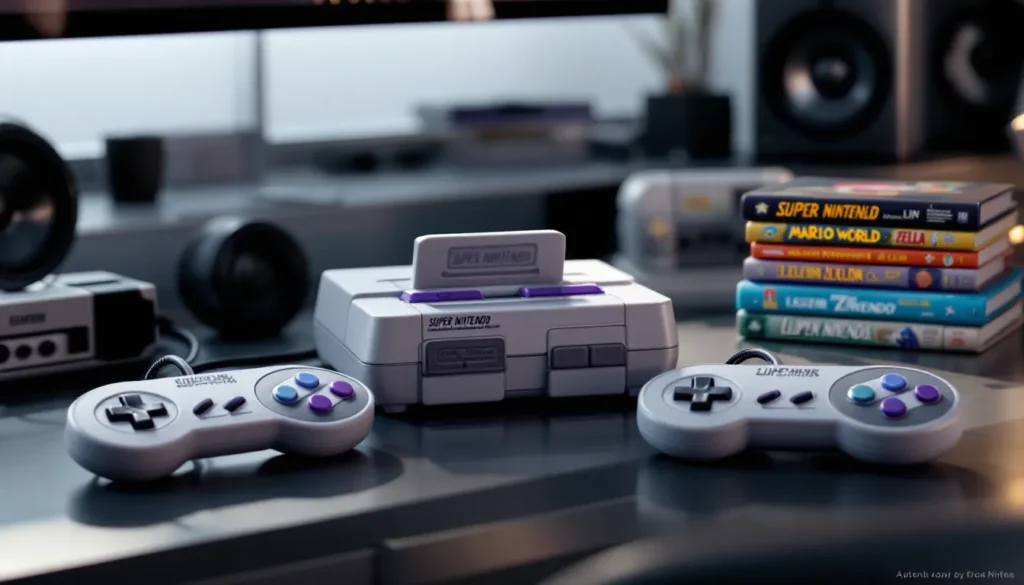
The Super Nintendo Entertainment System isn’t just a piece of gaming history, it’s a portal to some of the most iconic titles ever made. Whether you’re chasing childhood nostalgia or discovering what made 16-bit gaming legendary, hunting for a Super Nintendo for sale in 2026 requires more knowledge than it did back in the ’90s. Prices fluctuate wildly depending on condition, region, and completeness. Scammers prey on uninformed buyers. And with multiple SNES models and modern alternatives available, knowing exactly what you’re looking for saves both money and headaches.
This guide cuts through the noise. You’ll learn which SNES models exist, where to find them, what fair pricing looks like right now, and how to inspect a console before handing over cash. Whether you’re targeting a mint-condition Super Famicom or just want a working North American SNES to relive Super Metroid, you’ll walk away knowing exactly how to score the right console at the right price.
Key Takeaways
- A Super Nintendo for sale in 2026 typically costs $80–$120 for console-only models and $120–$180 for systems with cables and a controller, with prices stabilized after pandemic-era spikes.
- Original SNES consoles remain superior to modern alternatives for accuracy and authenticity, though the Nintendo Switch Online subscription and SNES Classic Edition offer convenient access to classic games without the hardware hunt.
- Always inspect cartridge slot pins, test the console with a known-working game before purchasing, and use payment methods with buyer protection to avoid scams when buying from online marketplaces or local sellers.
- North American SNES, Super Famicom, and SNES Jr. models each serve different purposes—choose based on your game library preferences, region, and whether you prioritize video quality or portability.
- Reproduction carts for expensive games like Chrono Trigger and Earthbound are prevalent, so verify authenticity by checking for the embossed Nintendo logo and proper security screws in any bundle deal.
- Demand detailed photos showing serial numbers and port conditions, avoid ‘untested’ consoles, and research fair market value on eBay sold listings and PriceCharting before committing to a purchase.
Why the Super Nintendo Still Matters in 2026
The SNES library remains untouchable in certain genres. RPGs like Chrono Trigger, Final Fantasy VI, and Earthbound defined narrative-driven gaming. Platformers like Super Mario World, Donkey Kong Country, and Mega Man X set movement and level design standards that modern indie devs still chase. Fighting games like Street Fighter II Turbo and Super Smash TV laid the groundwork for competitive gaming.
Emulation exists, sure. But playing on original hardware delivers accuracy that software emulation occasionally misses, timing nuances in Super Mario World speedruns, slowdown patterns in Contra III, and CRT scanline aesthetics that modern displays can’t fully replicate. Collectors value authenticity. Speedrunners need precision. Casual players just want the tactile feel of those iconic purple buttons.
The retro gaming market has matured since 2020. Prices stabilized after pandemic spikes, but demand hasn’t disappeared. According to industry tracking from Digital Trends, retro console sales remain strong as Gen X and Millennials hunt down childhood favorites while Gen Z discovers pre-HD gaming through Twitch retro streams and YouTube retrospectives. The SNES sits at the sweet spot: old enough to feel nostalgic, young enough to remain playable without extensive restoration.
Understanding Super Nintendo Console Variations and Models
Not all Super Nintendos are created equal. Regional differences, hardware revisions, and special editions mean “SNES for sale” could refer to half a dozen different consoles. Knowing the distinctions helps you target the right model and avoid compatibility headaches.
Original SNES (North American Model)
The North American SNES Model SNS-001 features the boxy gray design with purple accent buttons and a sliding power switch. Released in August 1991, this is the console most American gamers remember. It outputs composite, S-Video, and RGB (with modification). The cartridge slot uses the taller North American cart shape, incompatible with Super Famicom games without an adapter.
Two motherboard revisions exist: the earlier 1CHIP models (identifiable by serial numbers starting with “UN3”) deliver sharper RGB output and are prized by enthusiasts using upscalers like the RetroTINK or OSSC. Later revisions use multi-chip designs with slightly softer video. Unless you’re running RGB through a scaler, the difference is negligible.
Super Famicom (Japanese Model)
Japan’s Super Famicom launched in November 1990 with a sleeker, colorful design, gray body with red, green, yellow, and blue buttons. Functionally identical to the SNES, it uses a different cartridge slot shape. Region-locking is purely physical: swapping cartridge slot tabs or using adapters grants full compatibility.
Super Famicom consoles often cost less than North American models due to higher availability in Japan. They’re region-free for 99% of games (exceptions like Anthrax and RoboCop 3 check region chips, but these are rare). Import gamers favor the Super Famicom for access to Japan-exclusive titles like Fire Emblem: Genealogy of the Holy War and Bahamut Lagoon.
PAL Region SNES (European Model)
European PAL SNES consoles share the Super Famicom’s colorful button design but use the taller North American cartridge slot. PAL games run at 50Hz instead of 60Hz, causing slower gameplay and black borders on NTSC displays. PAL consoles also output PAL video signals, creating compatibility issues with North American TVs unless modded.
Unless you’re specifically collecting PAL games or live in a region where PAL hardware is abundant, North American or Japanese models are better picks for most buyers.
SNES Jr. and Special Editions
The SNS-101 (SNES Jr.) arrived in 1997 as a budget redesign. This smaller, top-loading console ditched S-Video and RGB output entirely, supporting only composite video. No eject button exists, you pull carts straight out. The SNES Jr. is cheaper and more compact, but video quality takes a hit. Modders can restore S-Video and RGB, but stock units are strictly for casual play on CRTs.
Special editions like the Donkey Kong Country bundle (with DKC pre-installed on some Brazilian models) and the Toys “R” Us green SNES exist but command collector premiums. Unless you’re chasing specific colorways, standard models deliver identical performance at lower cost.
Where to Buy a Super Nintendo Console in 2026
Finding a Super Nintendo for sale isn’t hard. Finding one at a fair price without getting scammed requires knowing where to look and what red flags to watch for.
Online Marketplaces and Auction Sites
eBay remains the largest marketplace for retro consoles. Filtering by “sold listings” shows real-world pricing trends. Look for sellers with 98%+ positive feedback and detailed photos showing serial numbers, port conditions, and any cosmetic damage. Avoid listings with stock photos or vague descriptions like “untested” unless you’re comfortable gambling on a broken console.
Mercari and Facebook Marketplace offer local pickup options, letting you test before buying. Prices often run lower than eBay since sellers avoid auction fees, but scam risk increases. Always meet in public, bring a CRT TV or portable display, and test the console before exchanging cash.
Reddit’s r/GameSale and r/retrogameswap communities help peer-to-peer sales with reputation systems. Confirmed trades build seller credibility. Prices trend fair since the community self-polices scalping. Payment happens through PayPal Goods & Services for buyer protection.
Retro Gaming Specialty Stores
Brick-and-mortar and online retro game stores like DKOldies, Lukie Games, and eStarland sell tested, guaranteed-working consoles. Prices run 10-20% higher than private sales, but you’re paying for warranty coverage and return policies. Most specialty stores clean, test, and replace worn components before listing.
Local retro game shops offer hands-on inspection. Staff can answer technical questions, and you leave with a working console immediately. Selection varies wildly by location, so call ahead to confirm stock.
Local Options: Thrift Stores, Garage Sales, and Flea Markets
Thrift stores like Goodwill and Savers occasionally stock SNES consoles, but competition is fierce. Retro game hunters check electronics sections daily. Pricing is unpredictable, you might score a $20 SNES or find it marked at $150 because staff Googled eBay listings.
Garage sales and estate sales yield the best deals for patient hunters. Listings on Craigslist, Facebook Marketplace, and Nextdoor tip you off to weekend sales. Arrive early, bring cash, and be ready to negotiate. Sellers often bundle consoles with games and accessories, increasing value.
Flea markets depend heavily on vendor knowledge. Some dealers price consoles at collector rates: others treat them as generic old electronics. Building rapport with regular vendors can lead to first dibs on fresh inventory.
What to Expect: Super Nintendo Pricing in 2026
SNES pricing in 2026 has cooled from pandemic-era peaks but remains higher than pre-2020 levels. Market data from TechRadar indicates retro console prices stabilized in late 2024 and early 2025 as supply chains normalized and speculative buying decreased.
Console-Only vs. Complete-in-Box Pricing
A console-only North American SNES (just the system, no cables or controllers) typically sells for $80-$120 depending on condition and seller. Super Famicom consoles run slightly cheaper at $70-$100 due to higher Japanese market availability.
Console with cables and one controller bundles range from $120-$180. This is the sweet spot for most buyers, everything needed to start playing immediately.
Complete-in-Box (CIB) systems with original packaging, manuals, and inserts command premium prices: $250-$400 for North American SNES models in good condition, and $500+ for mint, sealed units. Collectors chase CIB consoles: players should skip the box premium and put that money toward games.
SNES Jr. consoles sell for $60-$100 due to inferior video output. Special editions like the Donkey Kong Country bundle or translucent debug units fetch $300-$800+ depending on rarity and condition.
How Condition Affects Value
Mint/Like-New: No scratches, yellowing, or wear. All ports tight, no corrosion. Commands top-tier pricing.
Good: Light yellowing (common on gray SNES plastic due to bromine oxidation), minor scratches, slight cosmetic wear. Fully functional. This is where most consoles land. Expect pricing at the mid-range of the brackets above.
Fair/Poor: Heavy yellowing, cracked plastic, worn labels, loose cartridge slots, or missing port covers. Pricing drops 20-40% unless the buyer plans restoration. Avoid consoles with visible corrosion inside the cartridge slot or on motherboard components unless you’re experienced with repairs.
Non-working or “parts” consoles sell for $30-$50. These are for modders and repair enthusiasts, not casual buyers.
Inspecting a Used Super Nintendo: What to Check Before You Buy
Buying a used SNES without testing it is gambling. Whether you’re meeting locally or inspecting before bidding online, these checks separate working consoles from expensive paperweights.
Physical Condition and Cosmetic Issues
Inspect the cartridge slot first. Shine a light inside and look for bent, broken, or corroded pins. Pins should be straight, evenly spaced, and free of green corrosion. Bent pins can often be straightened, but extensive corrosion indicates water damage or long-term exposure to humidity.
Check the expansion port on the bottom (used by accessories like the Super Game Boy). Corrosion here suggests the console was stored in damp conditions, increasing the likelihood of internal board damage.
Examine the power and A/V ports for physical damage. Loose DC jacks or cracked A/V ports can cause intermittent power or video issues. Wiggle cables gently while plugged in to check for loose connections.
Yellowing plastic is cosmetic and doesn’t affect performance, but extreme yellowing sometimes correlates with age-related capacitor degradation. If you care about aesthetics, retrobright treatments can restore original color, but that’s extra work.
Testing Functionality and Performance
Never buy an “untested” console unless you’re getting a steep discount and are comfortable with potential repairs. Bring a CRT TV or portable LCD with composite input, a known-working SNES game, and a controller to test in person.
Power-on test: Plug in the console and power it on without a game inserted. You should see a black screen (no video signal). If you see a colored screen or garbled graphics, suspect bad VRAM or PPU chips.
Game boot test: Insert a cartridge and power on. The game should boot immediately. If it doesn’t, power off, remove the cart, clean the pins with isopropyl alcohol (91% or higher) and a cotton swab, and retry. Persistent boot failures indicate dirty cartridge slot pins or more serious motherboard issues.
Controller test: Test all buttons (A, B, X, Y, L, R, Start, Select) and the D-pad in all four directions. Sticky or non-responsive buttons suggest worn membranes or dirt buildup. Controllers are cheap to replace, but it’s a red flag if the seller didn’t bother cleaning them.
Audio/Video test: Play for 5-10 minutes. Listen for audio glitches (crackling, missing channels) and watch for video artifacts (flickering, missing sprites, color issues). Run a game with lots of on-screen action like Contra III or Super Mario World to stress-test the PPU.
Verifying Authentic Hardware vs. Reproductions
Counterfeit SNES consoles are rare, but clone systems exist. Check for the Nintendo branding on the bottom label and inside the cartridge slot. Authentic consoles have model numbers (SNS-001, SNS-101 for North America: SHVC-001 for Super Famicom) and FCC IDs.
If buying online, ask the seller to photograph the motherboard (visible by removing the bottom screws). Authentic SNES boards have “Nintendo” silk-screened on the PCB. Clone boards use generic markings or no branding.
Reproduction consoles (like Retron systems) aren’t scams, they’re openly marketed as clone hardware, but they shouldn’t be sold as authentic SNES consoles. If the price seems too good and the seller is vague about the model number, walk away.
Essential Accessories and Add-Ons to Look For
A bare SNES console won’t do much without the right cables and controllers. Knowing which accessories are essential versus nice-to-have helps you avoid overpaying for bundles.
Controllers, Cables, and Power Supplies
Original SNES controllers (Model SNS-005) cost $15-$30 each depending on condition. Third-party controllers from brands like Hyperkin or Retro-Bit run $20-$35 and often improve on the original design with longer cables or turbo buttons. For serious play, nothing beats the original Nintendo controller’s build quality and responsive membranes.
The RF adapter bundled with early SNES consoles delivers the worst video quality and is essentially useless in 2026. Skip it. The composite A/V cable (yellow video, red/white audio) is the minimum acceptable output. S-Video cables deliver noticeably sharper video and are worth the $8-$15 investment if your display supports S-Video input.
For the best possible analog video, RGB SCART cables paired with an upscaler like the RetroTINK-5X or OSSC unlock the SNES’s full visual potential. This setup costs $150-$300+ but is overkill unless you’re a videophile or content creator.
Power supplies (Model SNS-002) output 10V DC, 850mA. Originals cost $10-$20, but third-party replacements are unreliable and risk damaging your console. Stick with OEM power supplies or verified aftermarket options like the Retro-Bit SNES AC Adapter.
The Super Multitap (Model SNS-034) enables four-player games like Super Bomberman and NBA Jam: Tournament Edition. It’s not essential, but if you’re into local multiplayer, expect to pay $20-$40 for an original or $15-$25 for a third-party version.
Must-Have SNES Games Worth Bundling
Sellers often bundle consoles with games, and evaluating the games’ value helps you judge bundle pricing. Common titles like Super Mario World (usually included with consoles) add $15-$20 of value. Donkey Kong Country adds $20-$30. Street Fighter II Turbo and Mortal Kombat are worth $15-$25 each.
If the bundle includes premium titles like Chrono Trigger ($80-$150 loose cart), Earthbound ($200-$350), or Mega Man X3 ($100-$200), the games may be worth more than the console itself. Verify cartridge authenticity, reproduction carts flood the market for expensive SNES games. Look for Nintendo’s embossed logo on the label and check screw types (original SNES carts use proprietary security screws, though some late-run games used Phillips heads).
Avoid bundles padded with shovelware sports titles or licensed movie tie-ins unless you’re getting a steep discount. Shaq Fu and Bebe’s Kids add zero value.
Alternatives to Original Hardware: Modern Options Explained
If hunting for original SNES hardware feels like too much hassle, or if you’re primarily interested in the games rather than collecting, modern alternatives deliver convenience at the cost of authenticity.
Nintendo Switch Online SNES Library
Nintendo’s Switch Online subscription service includes a growing library of SNES titles playable on Switch consoles. As of March 2026, over 50 SNES games are available, including Super Metroid, The Legend of Zelda: A Link to the Past, Super Mario World, F-Zero, and Star Fox 2 (previously unreleased).
A Nintendo Switch Online subscription costs $19.99/year for the basic tier or $49.99/year for the Expansion Pack (which adds N64 and Genesis games). You get legal access to dozens of classics, save states, and online multiplayer for supported titles. Coverage from Nintendo Life highlights regular additions to the library, though the selection remains incomplete compared to the full SNES catalog.
Limitations: you’re renting, not owning. If Nintendo discontinues the service, your access vanishes. Emulation quality is generally good but not perfect, input lag is slightly higher than original hardware, and some graphical effects render differently. For casual players, it’s fine. Speedrunners and purists will notice.
SNES Classic Edition (Super NES Classic Mini)
Nintendo released the SNES Classic Edition in September 2017 as a plug-and-play mini console with 21 pre-loaded games, including Super Mario World, The Legend of Zelda: A Link to the Past, Super Mario Kart, Donkey Kong Country, Final Fantasy III (VI), Earthbound, and the previously unreleased Star Fox 2.
The SNES Classic originally retailed for $79.99 but was discontinued in 2019. In 2026, they sell on the secondary market for $100-$180 depending on condition and whether it’s CIB. You get guaranteed-working hardware, HDMI output for modern TVs, and a curated selection of top-tier games.
Pros: no hunting for cartridges, no cleaning connectors, instant save states, and a rewind feature. Cons: the library is fixed (moddable with homebrew tools, but that voids any collectibility), and the bundled controllers have short cables.
For players who just want to experience SNES classics without the retro hardware hunt, the SNES Classic is a solid middle ground between original consoles and subscription services.
Tips for Buying Safely and Avoiding Scams
The retro gaming market attracts scammers targeting uninformed buyers. These strategies minimize risk whether you’re buying online or locally.
Use payment methods with buyer protection. PayPal Goods & Services, credit cards, and eBay’s Money Back Guarantee offer recourse if the seller ghosts you or ships a broken console. Avoid Venmo, Zelle, Cash App, or wire transfers, these have zero buyer protection.
Demand detailed photos. Sellers with nothing to hide provide close-ups of the serial number, cartridge slot pins, ports, and any cosmetic damage. Stock photos or single blurry images scream scam. Ask for a photo of the console powered on with your username written on paper next to it to confirm they actually have the item.
Check seller reputation. On eBay, filter for sellers with 98%+ positive feedback and at least 50 transactions. On Reddit, verify confirmed trades in r/mushroomkingdom. On Facebook Marketplace, check profile age and mutual friends.
Test before payment for local sales. Meet in a public place (library, coffee shop, police station parking lot) and bring a portable TV or display. If the seller refuses to let you test the console, walk away, it’s almost certainly broken.
Research fair market value. Check eBay sold listings, PriceCharting.com, and r/GameSale before making an offer. If a deal seems absurdly cheap (CIB SNES for $50, for example), it’s either broken, stolen, or a scam.
Beware of “untested” consoles. Sellers claiming they “don’t have cables to test it” are usually lying, SNES cables are ubiquitous and cheap. “Untested” almost always means “I tested it, and it doesn’t work.” Only buy untested consoles if you’re experienced with repairs and the price reflects the risk.
Verify cartridge authenticity in bundles. Reproduction carts for expensive games like Chrono Trigger and Earthbound are common. Check for the embossed Nintendo logo on the label, proper security screws, and correct weight (repros often feel lighter). If buying online, ask the seller to open the cart and photograph the PCB, authentic boards have Nintendo branding.
Document everything. Save all messages, listings, and payment confirmations. If something goes wrong, this documentation is essential for filing disputes or chargebacks.
Conclusion
Buying a Super Nintendo in 2026 isn’t as simple as walking into a store and grabbing a new console off the shelf, but it’s far from impossible. The market is active, supply is steady, and prices have stabilized after pandemic chaos. Whether you’re targeting a North American SNES for childhood nostalgia, a Super Famicom for import gaming, or a SNES Jr. for budget play, the right console is out there.
Success comes down to research and patience. Know which model you want. Understand fair pricing for your target condition. Test before you buy when possible, and use payment methods that protect you from scams. Don’t rush into the first listing you see, better deals appear weekly if you’re willing to watch multiple marketplaces.
For purists and collectors, original hardware remains the gold standard. For casual players, modern alternatives like Nintendo Switch Online or the SNES Classic deliver convenience without the hunt. Choose based on your priorities: authenticity versus accessibility, ownership versus rental, nostalgia versus practicality.
The SNES library isn’t going anywhere. The console’s build quality means units from the early ’90s still work flawlessly today. Whether you’re replaying Super Mario World for the hundredth time or discovering Chrono Trigger for the first, there’s no wrong time to bring a Super Nintendo home. Just make sure you do it smart.