
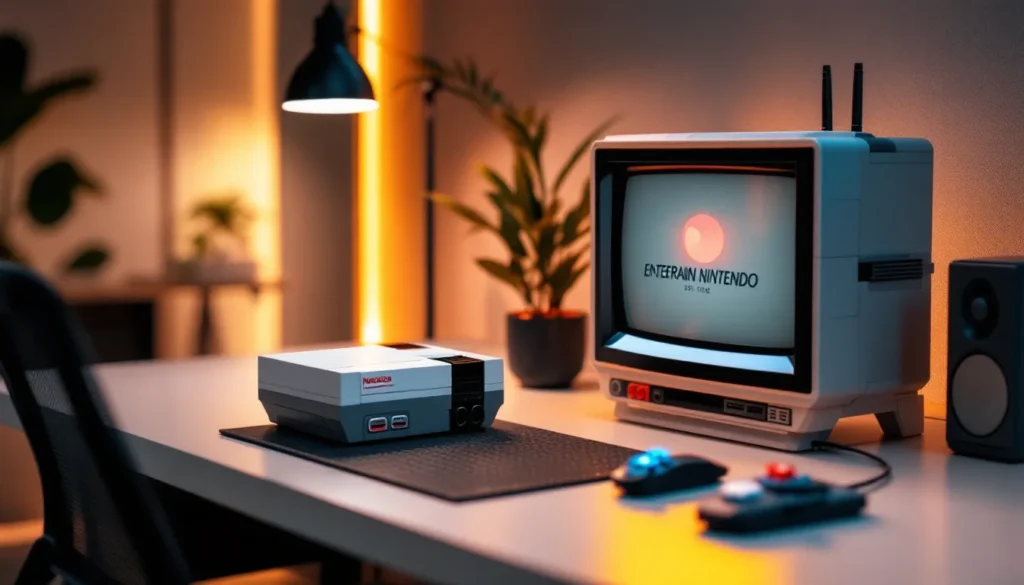
If you grew up in the ’80s or early ’90s, the boxy gray silhouette of the Nintendo Entertainment System probably lives rent-free in your brain. Now imagine rebuilding that icon brick by brick, complete with a functional TV that actually “plays” Super Mario Bros., sort of. The LEGO Nintendo Entertainment System (set 71374) isn’t just another licensed set collecting dust on shelves. It’s an engineering marvel that translates the magic of 8-bit gaming into a satisfying 2,646-piece build that’s as much mechanical wonder as it is display piece.
Released in August 2020 as part of LEGO’s collaboration with Nintendo, this set continues to captivate builders and gamers in 2026. Unlike the interactive LEGO Super Mario playsets aimed at younger audiences, the NES targets adult fans of both brands who remember blowing into cartridges and the satisfying click of slamming down that front-loading tray. Whether you’re a completionist collector, a retro gaming enthusiast, or just someone who appreciates clever design, this build hits different. Let’s break down what makes it one of the most beloved gaming-themed LEGO sets ever produced.
Key Takeaways
- The LEGO Nintendo Entertainment System (set 71374) features 2,646 pieces with a functional mechanical crank system that scrolls through the opening level of Super Mario Bros. World 1-1 using pure gears and tiles, no electronics required.
- With obsessive period-accurate details like the front-loading cartridge mechanism, translucent red LED power indicator, and wood-grain TV paneling, the LEGO NES set captures authentic 1980s gaming nostalgia perfect for adult collectors and retro enthusiasts.
- This adult-targeted build (18+) typically takes 8-12 hours and costs $269.99 USD MSRP, offering standard $0.10-per-piece value with strong appreciation potential after retirement, making it a solid investment for gaming rooms and collector displays.
- The standout mechanical feature is the TV’s hand-crank scrolling system, which requires precision assembly and delivers genuine satisfaction—a conversation-starting mechanism that separates this set from typical licensed LEGO fare.
- The LEGO NES set targets a specific audience of adults who experienced the original console, prioritizing engineering ingenuity and display quality over interactive play, unlike the younger-focused LEGO Super Mario series.
- Availability remains relatively stable in early 2026, but secondary market prices exceed $300-$350 for sealed sets, signaling strong collector demand and potential for further appreciation once the set is officially retired.
What Makes the LEGO Nintendo Entertainment System So Special?
A Perfect Fusion of Two Iconic Brands
LEGO and Nintendo don’t just share decades of cultural dominance, they both perfected the art of turning simple mechanics into something magical. The NES set nails that crossover appeal by recreating the 1985 console at roughly 1:1 scale with obsessive attention to period-accurate details. The cartridge slot actually opens. The controller has a connecting cable built from LEGO chain links. Even the power and reset buttons are there, complete with tiny red LEDs represented by translucent bricks.
What separates this from typical licensed LEGO fare is the commitment to functional design. This isn’t a static model. The cartridge locks into place with a satisfying mechanism that mimics the original’s controversial front-loading system (the one that eventually led to the “blow on it” era of troubleshooting). It’s that kind of tactile authenticity that makes the build feel less like a toy and more like reconstructing a piece of gaming history.
The Interactive TV Screen Mechanism
Here’s where things get genuinely impressive: the included retro CRT television doesn’t just sit there looking pretty. Turn a crank on the side, and the screen actually scrolls through the opening level of Super Mario Bros., World 1-1. The image is built entirely from LEGO bricks arranged on a rotating internal mechanism, creating a continuous loop of pixelated platforming action.
The TV measures about 9 inches tall and features chunky dials, wood-grain paneling rendered in printed tiles, and even adjustable antenna rabbit ears. When you insert the Super Mario Bros. Game Pak into the console and connect the controller, the whole setup looks like it was frozen in time from 1986. It’s pure visual candy for anyone who spent childhood afternoons parked three feet from a television trying to find the warp zones.
Unboxing and What’s Inside the Set
Piece Count and Build Complexity
The LEGO NES ships with 2,646 pieces spread across numbered bags that follow LEGO’s modern building system. You’re looking at a build that typically takes 8-12 hours depending on experience level, which puts it firmly in the “weekend project” category. The instruction manual is a chunky 372-page booklet that includes a brief history of the NES and its impact on gaming, a nice touch that adds context beyond just assembly steps.
The piece selection skews heavily toward Technic elements and smaller detail bricks. Expect lots of plates, tiles, and connector pins rather than large structural bricks. This isn’t a beginner set, and LEGO rates it as 18+, which is accurate given the mechanical complexity of the TV’s scrolling system. Some sub-assemblies require precise alignment to function smoothly, and there’s minimal margin for error when building the crank mechanism.
Included Accessories and Easter Eggs
Beyond the console and TV, you get a buildable NES controller that plugs into the front port via a flexible cable. The controller is surprisingly detailed for its size, with a printed directional pad, select/start buttons, and the classic A/B button layout. It’s permanently attached to the console, no wireless here, just like 1985 intended.
The Super Mario Bros. Game Pak is a separate build that slides into the cartridge slot. Pop open the console’s front flap, insert the cart, and push it down, it locks with a mechanism that genuinely mimics the original’s loading action. LEGO included subtle Easter eggs throughout: the TV’s power light is a translucent red stud, the console’s expansion port on the bottom is represented, and even the RF switch box gets a tiny brick representation. Collectors who pay attention will spot references to the NES’s actual hardware quirks, right down to the ventilation grille pattern on top.
Building the LEGO NES: A Step-by-Step Experience
Constructing the Console and Controller
The build kicks off with the NES console itself, starting from the base and working upward. Early stages focus on the internal framework that houses the cartridge mechanism, this is where you’ll place gears, axles, and connector plates that make the front-loading tray functional. It’s methodical work that requires attention to orientation: a single reversed plate can jam the mechanism later.
The exterior shell comes together in layers, with careful tile work creating the smooth surfaces and beveled edges that define the NES’s industrial design. Builders familiar with LEGO’s architecture sets will recognize the SNOT (Studs Not On Top) techniques used to achieve those clean vertical surfaces. The controller assembly is comparatively quick, maybe 30 minutes, but satisfying in how it captures the rectangular form factor and button layout with minimal pieces.
Creating the Retro TV with Scrolling Screen
This is the star of the show from a building perspective. The TV starts with a surprisingly complex internal mechanism: a hand-crank system on the right side connects to a series of gears that rotate a drum inside the screen housing. That drum is where you’ll attach the pre-printed Mario level tiles in a specific sequence, creating a continuous scrolling loop.
Assembling the scrolling mechanism requires precision. The tiles must align perfectly, and the drum needs to rotate smoothly without binding. LEGO provides clear visual guides for tile placement, showing exactly which brick goes where in the sequence to recreate World 1-1’s opening moments, clouds, bushes, blocks, Goombas, and all. Once the mechanism is enclosed, you build the TV’s exterior: wood-grain side panels, chunky control dials that actually turn, and those iconic rabbit ear antennas.
Getting the scrolling action smooth can take some adjustment. If it feels sticky, you’ll likely need to check gear alignment or ensure no tiles are rubbing against the inner housing. When it works properly, the effect is mesmerizing, pure mechanical satisfaction with a side of childhood nostalgia.
Assembly Time and Difficulty Level
Plan for 10-12 hours for a comfortable first build, potentially longer if you’re meticulous about tile alignment or stop frequently to admire sub-assemblies. Experienced builders might knock it out in 8 hours. The difficulty curve isn’t steep, but it’s consistent, there are no easy stretches where you’re just stacking bricks mindlessly.
The challenge comes from the mechanical precision required, especially in the TV’s internal workings. This isn’t a set you can half-watch Netflix through: the scrolling mechanism demands focus. But, the payoff is worth it. Few LEGO sets deliver that “I can’t believe this actually works” moment quite like turning the crank for the first time and watching Mario’s world scroll past in blocky, beautiful motion.
The Ingenious Mechanics Behind the Scrolling Screen
How the Crank System Works
The magic happens through a deceptively simple gear train. Turning the crank on the TV’s right side rotates a series of axles and gears that drive the internal drum at a controlled speed. The gear ratio is calibrated so each rotation of the crank produces smooth, visible scrolling without being too fast or too jerky, it’s clearly been tested extensively to hit that sweet spot.
The drum itself is a hollow cylinder built from Technic beams and connector pins. The outer surface is where the level tiles attach in a wraparound sequence. As the drum rotates, the tiles pass behind a rectangular “screen” opening framed by the TV’s front panel. The result looks like side-scrolling gameplay, though obviously static since it’s just printed tiles rotating in a loop. No electronics, no motors, just gears, axles, and clever engineering.
What makes this particularly impressive is the tolerance management. The tiles need to clear the screen frame by millimeters without visible gaps, and the rotation must be smooth enough to maintain the illusion. LEGO’s designers nailed it, creating a purely mechanical animation system that feels like it belongs in a museum exhibit on pre-digital special effects.
The Super Mario Bros. Level Recreation
The scrolling sequence recreates the opening section of World 1-1, arguably the most famous level in gaming history. You’ll recognize the layout immediately: the starting point with its iconic bushes and clouds (which are actually the same sprite recolored), the first Goomba encounter, the question blocks, and the initial platforming challenges.
LEGO rendered the 8-bit graphics using printed tiles in a limited color palette that matches the NES’s output. The pixelation is intentional and accurate, they didn’t try to smooth anything out or add detail that wasn’t in the 1985 original. For retro gaming fans, it’s a faithful tribute. The sequence loops continuously, so you can crank through it over and over, though in practice it’s more something you demonstrate to visitors than actively play with.
One clever detail: the level scrolls in the correct direction (left to right), and the perspective is locked to match the game’s fixed-camera viewpoint. It’s the kind of authenticity that shows the designers actually understood and respected the source material rather than just slapping Mario imagery on a generic LEGO build.
Display and Design: Showcasing Your Build
Authentic 1980s Aesthetic and Details
LEGO went deep on period accuracy. The NES itself features the correct gray color (technically “medium stone gray” in LEGO terms), the beveled edges, and even the red LED power indicator positioned exactly where it sat on the original hardware. The controller ports on the front, the expansion port on the bottom, the AC adapter port on the side, they’re all represented, either functionally or cosmetically.
The TV is where the ’80s nostalgia really hits. The wood-grain paneling uses printed tiles rather than stickers (a significant quality upgrade), and the color palette matches the brown-beige-cream tones that dominated living room electronics in that era. The dials are oversized and chunky, the power button is a satisfyingly large circle, and the overall proportions capture that CRT bulk that modern flat panels can’t replicate.
Small touches elevate it further: the antenna tips are metallic silver, the screen has a subtle convex curve suggested through angled brick placement, and even the ventilation slots on the back of the TV are there. These aren’t functional details, they’re pure design language that communicates “this is a serious tribute, not a cheap cash-grab.”
Display Options for Gaming Setups
The completed build occupies roughly 15.5 × 9.5 × 12 inches when the console and TV are positioned together. That’s manageable for most shelves, gaming room displays, or office desks without overwhelming the space. The console and TV are separate pieces, so you can arrange them but you like, side by side, TV behind the console, or even on different shelves if space is tight.
Most builders position them together with the controller “plugged in” for the full 1985 living room vibe. The setup looks killer on floating shelves backlit with LED strips, particularly if you’ve got other retro gaming memorabilia nearby. It pairs especially well with actual vintage consoles or other gaming-themed LEGO sets for a cohesive collector display.
The set is sturdy enough for permanent display without constant maintenance. The scrolling mechanism holds up well to occasional demonstrations, just expect to re-align a tile or two if you’re cranking through it multiple times a week. Dust is the main enemy: those tile surfaces and the textured console top will collect it, so plan for occasional cleaning if it’s sitting out long-term.
Price, Value, and Where to Buy in 2026
Current Pricing and Availability
As of early 2026, the LEGO NES typically retails around $269.99 USD when available through official LEGO stores and their website. That’s the MSRP, and it’s held relatively steady since launch, LEGO hasn’t discounted it significantly because demand remains strong. Authorized retailers like Target, Amazon, and specialty gaming stores occasionally run sales, particularly during Black Friday or LEGO’s seasonal promotions, where you might snag it for $230-$240.
Availability fluctuates. The set hasn’t been officially retired yet, but stock comes and goes. If it’s out of stock through official channels, expect to pay a premium on the secondary market. Resellers on eBay, BrickLink, and Mercari often list sealed sets for $300-$350+, sometimes higher if they’re betting on imminent retirement. That markup isn’t justified unless you absolutely can’t wait for a restock.
For those outside the US, pricing varies by region but generally converts closely to the USD MSRP when accounting for VAT and import considerations. European buyers typically see it around €249.99-€269.99, while UK pricing hovers near £209.99-£229.99.
Is It Worth the Investment?
At $270, you’re paying about $0.10 per piece, which is standard for LEGO’s adult-oriented sets (the 18+ line). That’s reasonable value considering the mechanical complexity, licensed IP, and display quality. Cheaper sets exist if you just want piece count, but few deliver the same combination of nostalgia, engineering, and aesthetic polish.
The real value proposition depends on what you’re after. As a pure display piece for gaming enthusiasts, it’s borderline essential, few other products capture NES-era nostalgia this effectively. The scrolling screen isn’t a gimmick: it’s a legitimate conversation starter that justifies the price when you factor in the hours of entertainment from demonstrating it to friends.
As an investment? LEGO sets with strong licenses and unique mechanics tend to appreciate after retirement, though predicting that is always a gamble. The LEGO Nintendo partnership has produced several sets, but the NES remains the flagship for adult collectors. If it does retire in the next year or two, expect values to climb, potentially hitting $350-$400 sealed within 12-18 months post-retirement based on how similar sets have performed.
For builders who love retro gaming and appreciate mechanical LEGO builds, it’s worth every penny of that $270. If you’re on the fence about LEGO in general or don’t have strong NES nostalgia, it’s harder to justify, you’re paying a premium for a specific emotional connection.
Who Should Buy the LEGO Nintendo Entertainment System?
This set has a specific sweet spot: adults who grew up with the NES and appreciate LEGO’s more complex builds. If you remember the pain of the blinking power light, the relief of finally beating Bowser, or the mystery of why blowing on cartridges seemed to work, this is basically designed for you. It’s nostalgia weaponized through Danish bricks.
Beyond the retro crowd, it appeals to LEGO enthusiasts who prioritize mechanical ingenuity over size or piece count. If you geek out over gear ratios, functional mechanisms, and builds that do something rather than just sit there, the scrolling screen delivers. It scratches the same itch as sets like the LEGO Typewriter or Grand Piano, adult-focused engineering showcases disguised as display models.
Gaming room decorators and collectors find strong value here too. It’s instantly recognizable, conversation-starting, and fits the aesthetic of spaces dedicated to gaming culture. Streamers occasionally feature it in background setups for that retro credibility boost. Some enthusiasts covering Nintendo-focused content have highlighted it as essential gaming memorabilia.
Who should skip it? Younger builders who never experienced the NES era might not connect with it emotionally, the LEGO Super Mario playsets offer more interactive gameplay value for that demographic. Similarly, casual LEGO fans expecting a quick, relaxing build might find the mechanical assembly frustrating rather than rewarding. This demands patience and precision, not zen brick-stacking therapy.
If you’re buying it as a gift, make absolutely sure the recipient fits that collector/enthusiast profile. It’s not a toy for kids even though the branding, and it’s not a casual impulse purchase. It’s a $270 love letter to a specific era of gaming, and it speaks most clearly to those who lived through it.
Comparing to Other LEGO Gaming Sets
LEGO NES vs. LEGO Super Mario Series
The LEGO Super Mario line launched in 2020 alongside the NES, but they target completely different audiences even though sharing the same IP. The Super Mario sets are interactive playsets with electronic Mario figures, modular course-building mechanics, and Bluetooth connectivity for tracking coins and enemies. They’re designed for ages 6+ and emphasize replayability and expansion through dozens of add-on sets.
The NES, by contrast, is a static display build with one mechanical feature. You can’t play with it like the Super Mario sets, there’s no interactivity beyond cranking the screen. The appeal is entirely in the build experience and display value, not ongoing play. The Super Mario line is brilliant for kids or adults who want hands-on gaming in brick form: the NES is for collectors who want a museum-quality tribute on their shelf.
Price-wise, a Super Mario Starter Course runs around $60, making it far more accessible. But you’ll need multiple expansion sets to keep it interesting, and costs add up quickly. The NES is a one-and-done purchase that delivers complete satisfaction without requiring add-ons (though LEGO did release a Question Block expansion that pairs with it nicely).
Other Notable Gaming-Themed LEGO Sets
LEGO’s gaming portfolio has expanded significantly since 2020. The LEGO Atari 2600 (set 10306) launched in 2022 as a spiritual successor to the NES, similar retro vibe, buildable console with cartridges, and a diorama scene instead of a scrolling screen. It’s slightly smaller and less mechanically complex but appeals to the same collector demographic.
The LEGO Pac-Man Arcade (set 10323) arrived in 2023, featuring a buildable arcade cabinet with a mechanical crank that moves Pac-Man and the ghosts through a maze. It’s more compact than the NES but delivers similar “functional nostalgia” vibes. The aesthetic is pure early-’80s arcade culture, and it pairs beautifully with the NES on display shelves.
LEGO has also dipped into modern gaming with sets tied to Overwatch, Minecraft, and Sonic the Hedgehog. The Minecraft line is extensive and ongoing, targeting younger builders with modular, expandable builds. Overwatch sets (now discontinued) were more traditional action figure-scale builds without the mechanical innovation of the NES. Those interested in broader gaming culture coverage often track these releases as collectibles.
The NES remains the gold standard among adult-oriented gaming LEGO sets for balancing authenticity, mechanical interest, and display quality. The Atari comes close, but the scrolling screen gives the NES the edge in sheer “wow factor.” For collectors building a gaming shrine, grabbing the NES, Atari, and Pac-Man creates a killer retro trifecta.
LEGO’s partnership with gaming IPs shows no signs of slowing, with frequent releases tied to franchises like Fortnite and Animal Crossing joining the catalog. Publications covering Japanese gaming and related culture often note how these collaborations bridge generational gaps in gaming fandom. Yet even with new competition, the NES set’s combination of cultural significance and mechanical execution keeps it at the top of most collectors’ wish lists five-plus years after release.
Conclusion
The LEGO Nintendo Entertainment System isn’t just a display piece, it’s a functional time machine. Every click of the cartridge mechanism, every rotation of that crank revealing pixelated Goombas, every wood-grain tile on that retro TV reinforces why both LEGO and Nintendo have dominated their respective industries for decades. They understand that the details matter, that nostalgia hits hardest when it’s earned through authenticity, and that the best products aren’t just consumed, they’re experienced.
At 2,646 pieces and $270, it’s an investment that rewards patient builders with mechanical satisfaction and long-term display value. The scrolling screen remains one of LEGO’s cleverest non-electronic mechanisms, proof that sometimes the best tech is just gears and printed tiles doing exactly what they’re supposed to. Whether it’s anchoring your gaming setup, starting conversations with fellow retro enthusiasts, or just reminding you why you fell in love with gaming in the first place, the NES set delivers.
If you’ve been on the fence, grab it before LEGO inevitably retires it and prices climb into the stratosphere. Some pieces of gaming history deserve a spot on your shelf, and some deserve to be built brick by brick.