
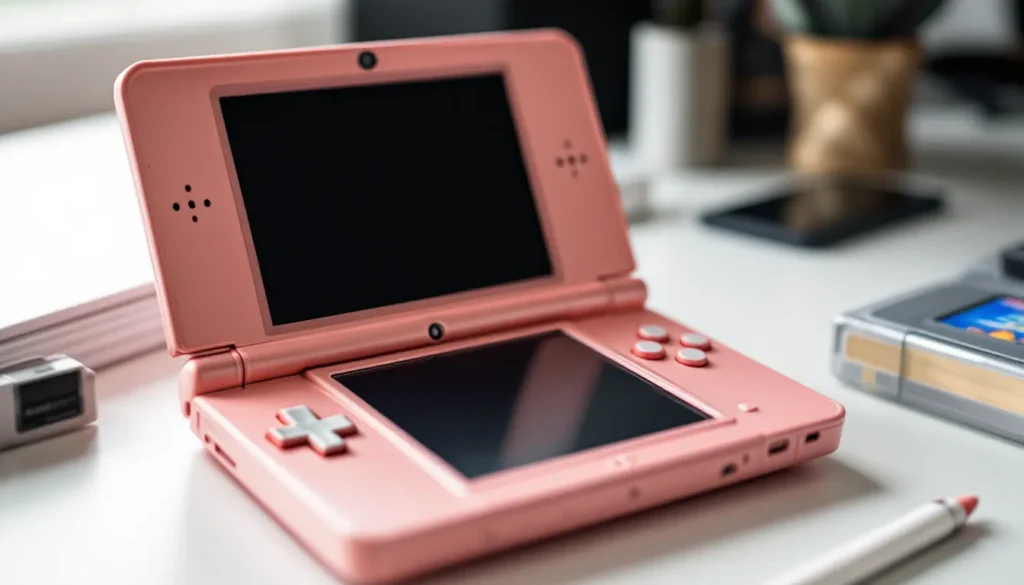
The pink Nintendo DS isn’t just a handheld console, it’s a piece of gaming history that captured hearts when it launched and continues to command collector attention nearly two decades later. Whether you’re hunting down the iconic Coral Pink DS Lite, tracking regional exclusives, or simply want to add this vibrant variant to your retro collection, the market in 2026 looks completely different than it did even five years ago. Prices have climbed, authentic units are harder to find, and knowing what you’re buying has become essential. This guide breaks down everything collectors and gamers need to know: which models exist, where to find them, how to spot fakes, what they’re actually worth, and how to keep yours in pristine condition for years to come.
Key Takeaways
- The Coral Pink DS Lite remains the most sought-after pink Nintendo DS model, with loose units in good condition ranging from $80–$120 and complete-in-box examples commanding $150–$250 as of 2026.
- Authentication requires checking serial numbers, verifying original shell quality and printing details, and inspecting for tri-wing screws—aftermarket shells and refurbished units are common in today’s market.
- Common wear issues like hinge cracks, screen scratches, and button degradation are typical on 15+ year-old units, but most can be repaired affordably or replaced with third-party components.
- Pink Nintendo DS values have appreciated 15–20% annually since 2020, with sealed Coral Pink models commanding premium prices; CIB units from the DSi and DS Lite era are becoming scarcer and more valuable.
- Reliable sources for purchasing include eBay and Mercari for competitive pricing, brick-and-mortar retro stores for guaranteed functionality, and Japanese import specialists for region-exclusive variants unavailable domestically.
- Proper maintenance including regular microfiber cloth cleaning, battery replacement ($10–$15), and storage away from direct sunlight helps preserve your pink Nintendo DS in excellent condition for decades.
The History and Appeal of the Pink Nintendo DS
Why Pink Became One of Nintendo’s Most Popular Colors
Nintendo wasn’t taking a risk when they introduced pink colorways for the DS line, they were responding to demand. The Game Boy Advance SP had already proven that non-traditional console colors could move units, but the DS era took it further. Pink variants appealed to a demographic Nintendo actively courted: female gamers who wanted hardware that felt personal and expressive rather than utilitarian.
The timing mattered. The mid-2000s saw the DS dominate with titles like Nintendogs, Brain Age, and Animal Crossing: Wild World, games that attracted players who’d never touched a console before. Pink versions became a statement piece, and Nintendo leaned into it hard across multiple models and regions. Sales figures backed the decision: pink DS Lite units consistently ranked among top-selling color variants in Japan, North America, and Europe.
But it wasn’t just marketing. The shade Nintendo chose, especially the Coral Pink, had a softer, more sophisticated tone than bubblegum competitors. It looked premium, not childish, which broadened its appeal beyond the assumed demographic.
Evolution Across DS Models: DS, DS Lite, DSi, and DSi XL
The original Nintendo DS (2004) launched in limited colors, mostly silver and black, with no pink option at release. That changed in 2005 when regional variants began appearing, though these early models are extremely rare today.
The DS Lite (2006) was where pink truly exploded. The Coral Pink DS Lite launched in Japan in July 2006 and hit North America and Europe shortly after. This became the definitive pink DS, with its glossy shell, compact form factor, and brighter dual screens. Multiple pink variants emerged across regions, including Noble Pink (a deeper, metallic finish exclusive to certain markets).
When the DSi arrived in 2008, Nintendo introduced Metallic Rose, a more subdued, champagne-tinted pink with a matte finish. The DSi also brought region-specific editions, including pastel pinks in Japan that never saw Western release. The DSi XL (2009) followed with its own pink variant, offering the same shade on a larger chassis aimed at older players and those wanting bigger screens.
Each generation refined the color and finish, but collectors today gravitate toward the DS Lite for its iconic design and the DSi for its rarity in certain regions.
All Pink Nintendo DS Models and Variants
Coral Pink DS Lite: The Most Sought-After Model
The Coral Pink DS Lite remains the crown jewel for collectors. Released globally between 2006 and 2007, it featured a glossy, vibrant shell that caught light beautifully and resisted showing fingerprints better than darker variants. The dual-screen brightness was a massive upgrade over the original DS, and the slimmer profile made it the go-to handheld for millions.
What makes this model so collectible? Availability and condition. While millions were sold, most saw heavy use, scratches on the screens, worn hinges, and faded shells are common. Finding a complete-in-box (CIB) unit with all original inserts, stylus, and documentation can easily cost $150-$250 depending on condition. Loose units in good shape hover around $80-$120 as of 2026.
Variant note: Some regions received slightly different shades. Japan’s Coral Pink has a warmer hue compared to the North American version, which leans cooler. Collectors debate which is “true” Coral Pink, but both command similar pricing.
Metallic Rose DSi and Other Pink DSi Variants
The DSi Metallic Rose launched in North America in 2009 and brought a more mature aesthetic. The matte, metallic finish felt premium and hid wear better than glossy Lite models. The DSi’s camera functionality and DSiWare store (now defunct, but explorable via homebrew) make it a compelling collector’s piece beyond just the color.
Japan received multiple DSi pink variants that never left the region, including Pink (a standard gloss finish) and limited bundles tied to games like Style Savvy. These Japanese exclusives are harder to source outside of import sites and typically cost 20-30% more due to shipping and rarity.
The DSi XL pink variant, released as Metallic Rose in most regions, offered the same color on a jumbo screen. It’s the least common pink model due to lower overall DSi XL sales, making it a niche collectible that sometimes exceeds Lite prices when in pristine condition.
Limited Edition and Regional Exclusive Pink Models
Nintendo released several pink limited editions that now command serious collector premiums:
- Nintendogs Coral Pink Bundle (2006): Packaged with Nintendogs: Lab & Friends and exclusive faceplates in some regions. CIB units routinely sell for $200+.
- Style Savvy DSi Bundle (Japan, 2009): Included exclusive DSiWare content and pink-themed stylus and case. Rare outside Japan.
- Animal Crossing: Wild World DS Lite (Europe, 2006): Featured custom decals and bundled game. Harder to authenticate due to aftermarket decal availability.
These bundles are tricky. Many were unboxed and separated from their pack-ins, so complete sets are scarce. Always verify authenticity via serial numbers and packaging details when hunting these down.
Where to Buy a Pink Nintendo DS in 2026
Online Marketplaces: eBay, Mercari, and Facebook Marketplace
eBay remains the largest marketplace for retro consoles, with hundreds of pink DS listings at any given time. Filters are your friend, search by condition (used, refurbished, new-other), region, and whether it’s loose or CIB. Watch out for “for parts” listings masquerading as functional units. Completed sales data (viewable with eBay’s advanced search) shows real market value, not inflated asking prices.
Mercari has become a goldmine for deals, especially from sellers offloading childhood collections who don’t know current market rates. The platform skews younger, so communication can be spotty, but patience pays off. Many listings include photos of actual units, making condition assessment easier than generic stock photos.
Facebook Marketplace is hit-or-miss. Local pickups eliminate shipping risk and let you test functionality before buying, but expect lowball offers and flaky sellers. Search radius matters, urban areas have better inventory but higher prices compared to rural listings. Collectors report strong deals on retro Nintendo hardware through persistent searching and quick responses.
Retro Gaming Stores and Specialty Retailers
Brick-and-mortar retro stores mark up inventory 20-40% over online prices, but you’re paying for guaranteed functionality and return policies. Chains like The Exchange and regional stores test systems, replace batteries, and sometimes offer warranties. This matters when buying 15+ year-old hardware with known failure points like hinges and touchscreens.
DKOldies, eStarland, and Lukie Games maintain online storefronts with graded condition ratings. Their “Excellent” or “Like New” grades are usually accurate, but “Good” can range from gently used to heavily worn. Photos upon request are standard, always ask before purchasing.
Japanese import specialists like Play-Asia and Solaris Japan stock region-exclusive pink models. Shipping from Japan adds $15-$30 and 1-3 weeks, but access to variants unavailable domestically justifies the wait for completionists.
What to Expect for Pricing and Condition
Here’s a realistic breakdown of 2026 pricing based on current market data:
DS Lite Coral Pink:
- Loose, good condition: $80-$120
- CIB, very good: $150-$200
- CIB, mint/sealed: $250-$400+
DSi Metallic Rose:
- Loose, good condition: $70-$100
- CIB, very good: $120-$180
- Limited editions/bundles: $180-$300+
DSi XL Metallic Rose:
- Loose, good condition: $90-$140
- CIB, very good: $160-$220
Condition tiers matter. “Good” means functional with visible wear, scratches, scuffs, maybe light yellowing. “Very Good” shows minimal use. “Excellent” or “Like New” means near-pristine. Always ask for additional photos of problem areas: hinge cracks, screen scratches, shoulder button condition, and shell discoloration.
How to Authenticate and Evaluate a Used Pink Nintendo DS
Identifying Genuine vs. Counterfeit or Refurbished Units
Counterfeit pink DS systems are less common than fake games, but refurbished units with aftermarket shells flood the market. Spotting them requires attention to detail.
Serial number verification: Every DS has a serial printed on the bottom label and internally on the motherboard (visible by removing the battery). Cross-reference the serial format with Nintendo’s regional codes. North American units start with specific prefixes (e.g., “UW” for DSi systems). Mismatched or absent serials flag fakes or frankensteined units.
Shell quality tells the story. Original Nintendo shells have consistent plastic texture, precise screw hole alignment, and tight panel gaps. Aftermarket shells, often from AliExpress or eBay, feel thinner, have rougher edges, and may not fit perfectly. Buttons can sit unevenly, and the hinge may wobble where originals felt solid.
Font and printing details: Nintendo used specific fonts for labels and screen printing around buttons. Blurry text, wrong font weights, or misaligned prints indicate replacement parts. The Nintendo logo on the top shell should be crisply molded, not painted or stickered.
Screws matter more than you’d think. Nintendo used tri-wing screws on DS systems. If you see Phillips head screws, the unit has been opened and likely modified. This isn’t necessarily bad, many collectors upgrade internals, but it should be disclosed and reflected in price.
Checking for Common Wear, Damage, and Functionality Issues
Even authentic units suffer age-related problems. Test everything before committing:
Hinge cracks: The DS Lite’s Achilles’ heel. Inspect both sides of the hinge where the top screen connects to the base. Fine cracks often start near the screw holes and spread with use. Minor cracks don’t affect functionality, but severe breaks can sever the ribbon cable. Gaming hardware reviews consistently cite hinge durability as the DS Lite’s biggest design flaw.
Screen condition: Check for scratches, dead pixels, and yellowing. The bottom touchscreen scratches easily, test touch response in all corners using the system’s Pictochat or calibration settings. Top screen backlight bleed (bright spots at edges) is common but not a dealbreaker unless severe.
Button responsiveness: Test every input: D-pad, face buttons, shoulder buttons (L/R), Start, and Select. Shoulder buttons fail frequently from worn contact pads. If they’re mushy or require excessive force, factor in repair cost ($10-$15 for replacement parts, easy DIY fix).
Battery and charging: Original batteries are 15-20 years old and likely degraded. A dead battery isn’t a dealbreaker, replacements cost $10-$15, but test that the system powers on when plugged in. Ensure the charging port isn’t loose or damaged.
Audio and volume: Play a game and test the speakers at various volume levels. Crackling or cutting out indicates worn potentiometers (volume wheels), which are repairable but annoying.
Shell discoloration: Pink variants yellow less than white models but still fade with UV exposure and oils. Compare shell colors in good lighting, significant mismatches between top and bottom shells suggest parts swapping.
Caring for and Maintaining Your Pink Nintendo DS
Cleaning and Protecting the Shell and Screens
Pink DS units show oils and grime more than darker colors, so regular cleaning maintains that collector-grade appearance.
For glossy shells (DS Lite): Use a microfiber cloth slightly dampened with isopropyl alcohol (70% or higher). Wipe in gentle circles, avoiding decals or printed areas. Never spray liquid directly onto the system, moisture can seep into gaps. For stubborn grime in crevices, use a soft toothbrush (new, dedicated for electronics). Dry thoroughly before storing.
For matte finishes (DSi Metallic Rose): Skip alcohol, it can dull the metallic finish. Use a dry microfiber cloth or slightly damp (water only) cloth. Matte surfaces hide fingerprints better but can develop shiny wear spots from repeated handling: there’s no fix for this beyond shell replacement.
Screen protection: If using the system regularly, apply modern screen protectors designed for DS dimensions (available on Amazon and eBay). For display pieces, leave screens clean and store with protective cases to prevent scratches. Clean screens with microfiber only, never paper towels, which scratch plastic.
Preventing yellowing: UV exposure accelerates plastic discoloration. Store systems away from direct sunlight, preferably in closed cases or drawers. Silica gel packets in storage containers control humidity, preventing internal corrosion and sticky residue buildup.
Battery Replacement and Long-Term Storage Tips
Original DS batteries are lithium-ion and degrade whether used or not. After 15-20 years, most hold minimal charge or have swollen (a fire hazard).
Replacement batteries: Third-party batteries from reputable sellers (Cameron Sino, Insten) cost $10-$15 and perform nearly identically to originals. Avoid ultra-cheap options, they often fail within months or lack proper safety circuits. Installation is straightforward: remove the back panel, disconnect the old battery, swap in the new one. No soldering required.
Storage with or without battery? Debate rages among collectors. Leaving dead batteries installed risks leakage and corrosion. Remove batteries if storing long-term (1+ year) and keep them separately in a cool, dry place. If displaying or using occasionally, replace with new batteries and charge every 3-6 months to maintain cell health.
Cartridge slot maintenance: Dust and corrosion build up in cartridge slots over time. Use compressed air (short bursts, held upright) to clear debris. For corroded contacts, carefully clean with a cotton swab dipped in isopropyl alcohol. Let dry completely before inserting games.
Case storage recommendations: Hard shell cases (official Nintendo or third-party) protect against drops and scratches. For long-term collection storage, anti-static bags inside hard cases offer maximum protection. Label cases with model and condition notes to avoid unnecessary handling.
Best Games to Play on Your Pink Nintendo DS
Must-Have Nintendo DS Titles for Every Collection
Owning a pink Nintendo DS without the games that defined the platform is like buying a sports car and leaving it in the garage. These titles showcase what made the DS revolutionary:
Nintendogs (2005): The game that arguably sold more DS systems than any other. Pick your breed, train your puppy, enter competitions. The touch and microphone controls felt magical in 2005 and still have nostalgic charm. The DS Lite era and Nintendogs are inseparable, many pink DS owners bought the system specifically for this game.
The Legend of Zelda: Phantom Hourglass (2007): Divisive for its stylus-only controls, but masterfully designed around the hardware. The sailing, puzzles, and dungeon exploration feel uniquely DS. Many collectors pair their pink DS with special edition Nintendo hardware celebrating Zelda’s legacy across generations.
Professor Layton and the Curious Village (2007): The puzzle-adventure series that made the DS the thinking gamer’s handheld. Challenging brain teasers, charming art, and British voice acting. The entire Layton series is worth playing, but start here.
Elite Beat Agents (2006): Rhythm game insanity. Tap and drag to the beat while cheering on people through life crises. Excellent soundtrack, hilarious scenarios, brutally difficult on harder modes. A cult classic that showcased the touchscreen’s potential.
New Super Mario Bros. (2006): The return of 2D Mario after over a decade. Tight controls, creative level design, addictive multiplayer. Still holds up as one of the best platformers on the system.
Animal Crossing: Wild World (2005): The game that defined “cozy gaming” before the term existed. Real-time village life, fishing, fossil hunting, and terrorizing neighbors. The DS online functionality is long dead, but local play and solo relaxation remain timeless.
Hidden Gems and Underrated Games Worth Revisiting
Beyond the blockbusters, the DS library is deep with overlooked titles that deserve playtime on that pink hardware:
The World Ends With You (2007): Squaresoft’s bold attempt at something different, urban fantasy RPG set in Shibuya with dual-screen combat that forced you to fight on both screens simultaneously. Challenging, stylish, and packed with attitude. Critical reception praised its innovation, and it remains a must-play for RPG fans.
Rhythm Heaven (2008): Deceptively simple rhythm mini-games with bizarre, addictive charm. Perfect for short play sessions. The difficulty curve is sneaky, what seems easy becomes brutally precise on higher ranks.
Ghost Trick: Phantom Detective (2010): From the creator of Ace Attorney, this puzzle-adventure has you manipulating objects as a ghost to prevent deaths. Incredible animation, twisty plot, and clever puzzles. Criminally underplayed at release.
Radiant Historia (2010): Time-travel RPG with branching timelines and tactical grid-based combat. Dense story, excellent music, and mechanics that reward experimentation. A late-gen gem that flew under most radars.
Henry Hatsworth in the Puzzling Adventure (2009): Half-platformer, half-match-3 puzzle game. You platform on the top screen while clearing blocks on the bottom to power up. Weird concept, flawless execution, and punishingly hard.
Kirby: Canvas Curse (2005): Stylus-only Kirby game where you draw rainbow paths for Kirby to roll on. Creative, challenging, and a showcase for what the DS could do when developers took risks.
These games represent the DS library’s diversity, touch-first design, dual-screen creativity, and willingness to experiment that no other handheld matched.
Customization and Modding Options for Pink DS Systems
Shell Replacement and Custom Faceplates
If your pink DS shell is beyond saving, cracked, yellowed, or just worn, aftermarket shells offer a reset button on aesthetics.
Replacement shells flood marketplaces like AliExpress, eBay, and Amazon. Quality varies wildly. Transparent shells ($15-$25) are popular and look striking with pink internals visible. Full replacement pink shells ($20-$30) attempt to match the original Coral Pink shade, but most fall short, they’re either too bright, too matte, or slightly off in hue.
Installation difficulty: Moderate. DS Lite shell swaps require tri-wing and Phillips screwdrivers, patience, and about 45 minutes. Dozens of YouTube guides walk through the process. The touchscreen digitizer is the trickiest part, rush it and you’ll crack the screen or misalign the fit. DSi swaps are slightly more complex due to camera ribbon cables.
Faceplates (DS Lite only): The DS Lite’s removable faceplate made customization easy. Original Nintendo faceplates from other colors fit perfectly and can be swapped in minutes. Third-party printed faceplates offer custom designs, anime characters, retro patterns, or solid colors. Expect to pay $8-$15 for quality third-party plates.
Paint and vinyl wraps: For the truly adventurous, custom paint jobs can refresh faded shells. Disassemble fully, sand lightly, prime, and apply thin coats of plastic-safe paint. Clear coat seals the finish. Vinyl wraps (like dbrand-style skins) are less permanent and easier to apply but less durable than paint.
Homebrew and Flashcarts: Unlocking More Functionality
Flashcarts revolutionized DS ownership by allowing ROM loading, homebrew apps, and region-free gaming. The legal gray area persists, owning flashcarts is legal, but loading pirated ROMs isn’t. That said, they’re invaluable for playing backups of games you own, testing rare imports, or running homebrew.
Popular flashcarts in 2026:
- R4 Gold Pro (2024+): Supports all DS and DSi firmware versions, microSD cards up to 128GB, and runs homebrew smoothly. $20-$30 from online retailers.
- Ace3DS X: Budget option ($15-$25) with solid compatibility but slower menu loading.
- EZ-Flash Omega Definitive Edition: Premium choice ($50+) with best-in-class compatibility and GBA slot support for DS Lite.
Setup is plug-and-play: copy firmware to a microSD card, insert the cart, and boot. The DS reads it as a legitimate game cart.
Homebrew worth exploring:
- TWiLight Menu++: Custom firmware that boots ROMs directly without a flashcart, plus theme customization and cheat support.
- BootNTR: Enables real-time save states, screen recording (via PC capture), and on-the-fly cheats.
- DScraft: Fully functional Minecraft clone running natively on DS hardware. Impressive tech demo.
- Pixel Painter: Drawing app that uses both screens as a canvas, perfect for digital sketching.
Risks and considerations: Nintendo hasn’t supported the DS for years, so bricking risk is minimal. That said, bad flashcart firmware can corrupt save data or fail to boot. Stick to reputable sellers and updated firmware. For collectors keeping systems pristine, consider dedicating a second unit to modding rather than altering a mint pink DS.
The Pink Nintendo DS as a Collectible: Investment and Community
Retro gaming collecting exploded post-2020, and the DS benefited from millennial nostalgia and Gen-Z discovery. Pink variants occupy a unique space, common enough to be attainable, rare enough in top condition to hold value.
Investment outlook: Don’t expect exponential growth like sealed Game Boy Color units have seen, but pink DS values have steadily climbed 15-20% annually since 2020. CIB Coral Pink DS Lite consoles that sold for $60-$80 in 2019 now routinely hit $150-$200. Limited editions and Japanese exclusives have appreciated faster, sometimes doubling in value over five years.
Sealed units are the real appreciation play. A factory-sealed Coral Pink DS Lite sold for $950 at auction in late 2025, and that’s not an outlier, sealed retro hardware commands insane premiums as supply dwindles. If you find a sealed pink DS under $500, it’s worth considering as long-term hold.
Grading services like WATA Games and CGC Video Games offer professional authentication and encapsulation. Graded pink DS units command 30-50% premiums, but grading costs $50-$150 depending on service tier and turnaround time. Only worth it for sealed or near-mint CIB units with strong provenance.
Community and trading: The DS collecting scene thrives on Reddit (r/gamecollecting, r/NintendoDS), Discord servers, and forums like NintendoAge. Trades are common, someone might swap a pink DS Lite for a rare game or different hardware. Face-to-face meetups at retro gaming conventions (Portland Retro Gaming Expo, Too Many Games) offer safe trading environments and opportunities to inspect units in person.
Cultural significance: The pink DS represents a shift in how gaming hardware was marketed and who it was for. Nintendo explicitly targeted broader demographics, and the pink variants symbolize that inclusive design philosophy. As gaming history preservation becomes more mainstream, units tied to specific cultural moments appreciate beyond pure functionality.
Whether you’re buying to play, collect, or invest, the pink Nintendo DS has earned its place as an icon. Prices will likely continue gradual climbs as condition-graded units become scarcer and nostalgia deepens.
Conclusion
The pink Nintendo DS carved out a legacy that goes beyond color, it represents an era when gaming hardware became personal, expressive, and accessible to everyone. Whether you’re chasing the glossy perfection of a Coral Pink DS Lite, hunting down regional exclusives, or restoring a well-loved unit to its former glory, there’s never been a better time to engage with this piece of gaming history. The market has matured, knowledge is abundant, and the community supporting these systems continues to grow. Armed with the insights in this guide, you’re ready to find, authenticate, maintain, and enjoy your pink Nintendo DS for years to come. Now get out there and start hunting, the perfect pink DS is waiting.