
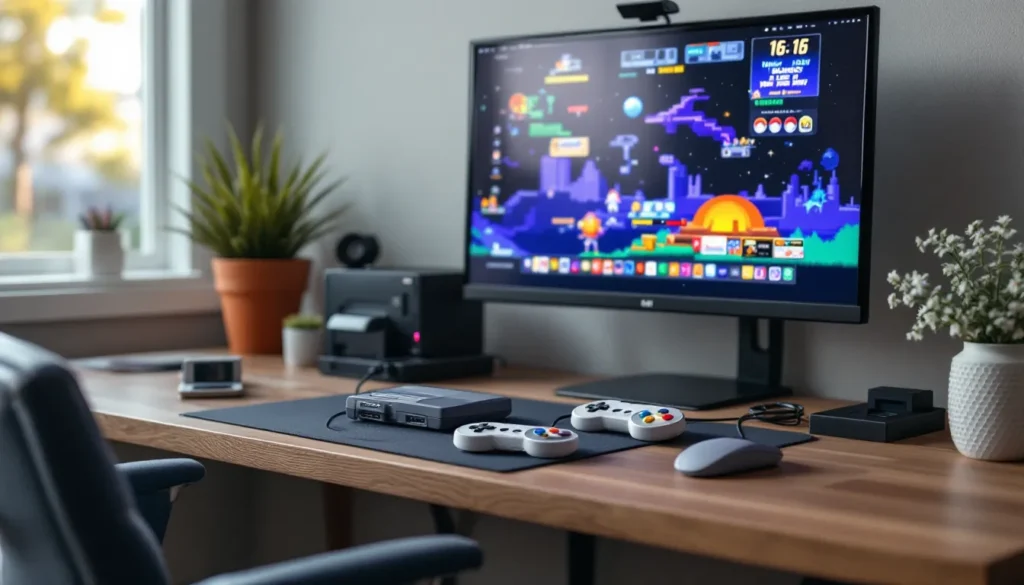
The Super Nintendo Entertainment System dropped in North America in 1991 and immediately changed what gamers expected from home consoles. This wasn’t just an incremental upgrade from the NES, it was a leap forward in graphics, sound, and gameplay complexity that defined an entire generation of gaming. Even in 2026, SNES titles remain benchmarks for game design, with their influence visible in everything from modern indie platformers to AAA RPGs.
Whether you’re hunting for the perfect starting point into retro gaming or looking to fill gaps in your knowledge of 16-bit masterpieces, the SNES library offers something for everyone. From genre-defining platformers to sprawling RPGs that still hold up against today’s releases, these games set standards that developers chase decades later. And beyond the household names, the SNES catalog is packed with overlooked gems that deserve attention, some of which never even made it out of Japan. This guide breaks down what makes SNES games essential, which titles belong on every gamer’s playlist, and how to experience them in 2026.
Key Takeaways
- Super Nintendo Entertainment System games remain foundational to modern game design, with mechanics from Mario’s platforming physics to Final Fantasy’s narrative complexity still influencing developers across indie and AAA studios.
- Essential SNES games span multiple genres including genre-defining platformers (Super Mario World, Donkey Kong Country), revolutionary RPGs (Chrono Trigger, Final Fantasy VI), and competitive fighting games (Street Fighter II) that established templates still used today.
- Hidden gems and Japan-exclusive SNES titles like Terranigma, Ogre Battle, and Live A Live offer exceptional experiences beyond the mainstream classics, with many now accessible through fan translations or official re-releases.
- Modern access to SNES games has expanded significantly through Nintendo Switch Online, SNES Classic Edition, FPGA-based hardware like the Analogue Super Nt, and legitimate emulation, making it easier than ever to experience these titles without major expense.
- SNES cartridge collecting has become a serious market with rare titles commanding hundreds or thousands of dollars, though common games remain affordable entry points for players wanting to experience the original hardware.
- The technical innovations behind SNES games—including Mode 7 graphics, the Super FX chip for polygonal effects, and advanced sound design by composers like Nobuo Uematsu and David Wise—demonstrate creative problem-solving within hardware constraints that still influences pixel art and retro-inspired games.
The SNES Legacy: Why These Games Still Matter in 2026
The SNES didn’t just compete in the 16-bit console wars, it won the long game. While Sega Genesis had attitude and marketing muscle, Nintendo’s console focused on tight gameplay, innovative tech, and first-party excellence that still influences design philosophy today.
What makes Super Nintendo entertainment system games particularly relevant now is how many modern mechanics trace back to this era. The tight platforming physics of Super Mario World became the template every 2D platformer measures against. The Legend of Zelda: A Link to the Past established the action-adventure formula that the series still uses. Super Metroid coined the term “Metroidvania” and created a genre that dominates indie development in 2026.
Beyond mechanics, the SNES proved that game narratives could be ambitious and emotionally resonant. Final Fantasy VI and Chrono Trigger told stories that rivaled contemporary films, with character arcs and plot twists that players still discuss decades later. The hardware’s expanded color palette and Mode 7 graphics capabilities allowed developers to create atmospheric worlds that felt alive in ways the NES couldn’t approach.
The competitive fighting game scene also owes its existence partly to the SNES. Street Fighter II became a cultural phenomenon on the platform, establishing frame data, combo systems, and tournament play that evolved into the modern FGC. These aren’t museum pieces, they’re foundational texts that serious gamers study to understand where today’s mechanics originated.
Essential SNES Games Every Gamer Should Play
Platformers That Defined a Generation
The SNES platformer lineup remains unmatched. Super Mario World launched with the console and immediately set the bar, 96 levels, secret exits, Yoshi’s debut, and the Cape Feather’s physics-defying flight mechanic. The level design teaches players through intuitive environmental storytelling rather than tutorials, a principle Nintendo still follows.
Donkey Kong Country arrived in 1994 and shocked players with pre-rendered 3D graphics that made other 16-bit games look dated overnight. Rare’s momentum-based platforming and environmental puzzles created a different rhythm than Mario, heavier, more deliberate, with brutal difficulty spikes that demanded pattern recognition and timing. The atmospheric worldbuilding through visuals and David Wise’s soundtrack made it feel like exploring an actual place rather than just clearing levels.
Super Mario World 2: Yoshi’s Island closed out the SNES era in 1995 with hand-drawn aesthetics and mechanics centered around Yoshi’s abilities. The egg-throwing precision aiming, flutter jumps, and transformation sequences showed platformers could still innovate even as the PlayStation era loomed.
Don’t sleep on Mega Man X either. Capcom took the classic formula, added wall-jumping, dash mechanics, and an upgrade system that rewarded exploration. The opening Highway stage remains one of gaming’s best tutorials, teaching movement, combat, and environmental interaction without a single text box.
RPGs That Changed Gaming Forever
Chrono Trigger isn’t just the best SNES RPG, it’s frequently cited as the greatest RPG ever made. Square’s dream team (including Dragon Quest creator Yuji Horii and Dragon Ball artist Akira Toriyama) crafted a time-travel narrative with multiple endings, no random encounters, and combo techniques that made party composition matter tactically. The New Game+ mode that carried over progress was revolutionary in 1995.
Final Fantasy VI took the series in a darker direction with an ensemble cast of 14 playable characters, each with distinct abilities and personal arcs. The opera house sequence demonstrated how the SNES could deliver theatrical storytelling, while Kefka’s ascension to godhood halfway through the game subverted RPG narrative structure in ways that still influence writers today.
Earthbound was a commercial flop in 1995 but achieved cult status for its modern-day setting, surreal humor, and surprisingly emotional climax. The battle system incorporated timed hits for extra damage, a mechanic Super Mario RPG and later Paper Mario refined. Its psychedelic visual style during boss fights pushed the SNES hardware in unexpected directions, and according to Siliconera, the game’s influence on modern JRPGs remains significant.
Secret of Mana offered real-time combat instead of turn-based battles, with three-player co-op that made it a social experience. The ring menu system for selecting weapons and magic became a UI staple, and the world map’s sense of scale impressed in the pre-open-world era.
Action and Adventure Masterpieces
The Legend of Zelda: A Link to the Past refined everything the NES original attempted. The Light World/Dark World duality doubled the map size and created puzzle opportunities where changes in one realm affected the other. The Master Sword, hookshot, and item-gated exploration established the template Zelda still follows, progression through tool acquisition.
Super Metroid perfected the formula Metroid established, with interconnected world design that rewarded sequence-breaking speedruns. Wall-jumping, the grappling beam, and Samus’s expanded moveset made exploration feel like solving a massive environmental puzzle. The silent storytelling during the baby Metroid sacrifice scene showed how games could deliver emotional gut-punches without dialogue.
Contra III: The Alien Wars brought arcade-perfect run-and-gun action home, with dual-wielding weapons, rotating Mode 7 stages, and co-op that demanded communication. The difficulty is legendary, casual players struggle on Easy, while Hard mode is genuinely punishing.
Hidden Gems and Underrated SNES Titles
Cult Classics Worth Discovering
Beyond the hall-of-famers, the SNES library contains dozens of exceptional games that flew under the radar. Terranigma arrived too late in the SNES lifecycle (1996 in Europe, never officially released in North America) but delivered an action-RPG with themes about creation, resurrection, and the cost of progress. The gameplay blends Zelda-style combat with town-building mechanics where player actions directly rebuild civilization.
Ogre Battle: March of the Black Queen introduced real-time strategy with tactical RPG elements, featuring a branching storyline influenced by player choices and a Tarot-based character recruitment system. The alignment system and multiple endings gave it replay value that most SNES games lacked.
Shadowrun translated the cyberpunk tabletop RPG into an isometric adventure with hacking minigames, strategic combat, and a gritty Seattle setting. The conversation system was ahead of its time, with keyword-based dialogue trees that rewarded paying attention to NPC hints.
Zombies Ate My Neighbors combined top-down shooting with horror movie homages and two-player co-op chaos. The weapon variety, from water guns to bazookas, and the challenge of rescuing neighbors before they turned made every level tense. Its cult following has only grown as players discovered it through retro gaming.
ActRaiser merged city-building simulation with side-scrolling action platforming, creating a hybrid genre that basically existed only in this game and its sequel. Players alternated between godlike oversight, guiding civilizations and directing construction, and descending as a warrior to clear monster lairs.
Japan-Exclusive Games That Deserved Worldwide Release
The language barrier and regional licensing kept incredible games locked to Japan, though fan translations have made many accessible. Bahamut Lagoon is Square’s tactical RPG with dragon-raising mechanics and a darker narrative than typical fantasy fare. The strategic layer involves positioning dragons whose elemental affinities affect battlefield terrain.
Live A Live featured seven distinct scenarios across different time periods, prehistoric, feudal Japan, the Wild West, modern day, near future, distant future, and sci-fi, each with unique gameplay mechanics. Square Enix finally gave it an official worldwide release via a 2022 Switch remake, but the SNES original showcased ambitious storytelling that wouldn’t become common until much later.
Front Mission: Gun Hazard took the mech strategy series into side-scrolling action-RPG territory with customizable wanzers (mechs) and run-and-gun gameplay that borrowed from Metal Slug. The political storyline and dialogue choices added depth beyond typical action games.
Seiken Densetsu 3 (released internationally in 2019 as Trials of Mana) offered six playable characters with three distinct storylines depending on party selection. The class change system and real-time combat iterated on Secret of Mana‘s formula with more strategic depth.
Genre-Defining SNES Games by Category
Fighting Games and Competitive Classics
Street Fighter II and its subsequent Championship Edition and Turbo iterations basically created the competitive fighting game scene. The frame-perfect combos, spacing, and mind games established a skill ceiling that players still grind to reach. Eight world warriors (later expanded to twelve) each with distinct playstyles meant matchup knowledge mattered as much as execution.
Super Street Fighter II Turbo is still played competitively in 2026, with frame data analyzed to the millisecond and tier lists debated with religious fervor. Ryu, Ken, Guile, and Chun-Li became gaming icons whose movesets players could recite from memory.
Mortal Kombat II brought the arcade’s violent spectacle home, complete with digitized actors and fatalities that sparked congressional hearings. The juggle system and more balanced roster made it competitive even though the controversy.
Killer Instinct arrived late (1995) with pre-rendered graphics and a combo system based on auto-doubles and linkers that encouraged offensive pressure. The combo breaker mechanic created a rhythm game within the fighting game, and much like how players explore Nintendo Switch shooter games for modern action, competitive players still dissect KI’s meta.
Sports and Racing Titles
NBA Jam defined arcade sports with over-the-top dunks, “he’s on fire” momentum swings, and two-on-two gameplay that prioritized fun over simulation. “Boomshakalaka” became part of gaming vocabulary, and the secret character codes (including Bill Clinton and Hugo Chavez in Tournament Edition) added discovery elements.
Super Mario Kart invented the kart racer subgenre and established the template, item boxes for combat-racing, drift mechanics for advanced players, and track shortcuts that separated casual from serious competitors. Battle Mode’s balloon-popping arena combat became its own competitive scene.
F-Zero showcased Mode 7 graphics at launch with futuristic anti-gravity racing at blistering speeds. Captain Falcon’s Blue Falcon and the Mute City theme became Nintendo staples. The difficulty curve punished mistakes harshly, there’s no rubberband AI to help struggling players catch up.
Super Punch-Out.. delivered pattern-recognition boxing where reading opponents’ tells was everything. Little Mac’s quest through the World Circuit featured colorful rivals with distinct fighting styles, and the instant restart encouraged grinding for perfect runs.
Puzzle and Strategy Games
Tetris Attack (reskinned from Panel de Pon) took match-three puzzle mechanics and added competitive versus mode with garbage blocks and combo systems. The skill ceiling was absurdly high, with top players executing 13+ chains under pressure.
Super Bomberman series turned maze-based bomb placement into strategic multiplayer chaos. The power-up system, increasing blast radius, adding remote detonation, gaining speed, created escalating tension as the arena filled with explosions.
Lemmings ported the PC puzzle classic successfully, tasking players with guiding suicidal rodents to safety through assigned roles (diggers, blockers, climbers). The level design required precise timing and resource management.
SimCity brought Will Wright’s city-building simulation to consoles with Dr. Wright (a character later referenced in various Nintendo games) guiding players through zoning, taxation, and disaster management. The SNES version added scenarios like rebuilding post-earthquake San Francisco.
The Technical Innovations Behind SNES Games
Mode 7 Graphics and Visual Breakthroughs
The SNES’s Mode 7 graphics chip allowed rotation and scaling of background layers, creating pseudo-3D effects that were mind-blowing in 1991. F-Zero‘s forward-scrolling tracks, Super Mario Kart‘s rotating courses, and the opening flight to Cid’s castle in Final Fantasy VI all leveraged this capability.
Contra III used Mode 7 for rotating stages where the entire battlefield spun, forcing players to constantly adjust their spatial awareness. Axelay‘s vertical and horizontal scrolling stages demonstrated how creative developers could push the effect beyond simple rotation.
The Super FX chip in cartridges like Star Fox enabled actual polygonal 3D graphics. While primitive by modern standards, the frame rate chugged, and texture detail was minimal, seeing Arwings dogfight in three-dimensional space on a home console was revolutionary. Yoshi’s Island used the Super FX2 chip for sprite scaling and rotation effects that gave it a distinctive hand-drawn look.
Developers also exploited color cycling and palette swaps for environmental effects. The heat waves in desert levels, the transition between Light and Dark Worlds in A Link to the Past, and the transparency effects for water and lava demonstrated technical artistry within strict hardware limitations, and Nintendo Life frequently covers how these techniques influenced modern pixel art games.
Sound and Music Achievements
The SNES’s sound chip supported eight channels of sampled audio, allowing composers to use actual instrument recordings rather than pure synthesis. This led to a golden age of video game music that holds up remarkably well.
Nobuo Uematsu’s Final Fantasy VI soundtrack featured the opera “Aria di Mezzo Carattere” with digitized vocals, an audacious attempt at grand opera on cartridge-based hardware. The character themes for Terra, Celia, and Shadow each conveyed personality through melody.
David Wise’s atmospheric work on the Donkey Kong Country trilogy created moods, the underwater ambience of “Aquatic Ambiance,” the industrial percussion of factory stages, the haunting melancholy of “Stickerbrush Symphony.” These weren’t just catchy tunes: they were emotional storytelling through sound design.
Yasunori Mitsuda’s Chrono Trigger score blended time periods sonically, medieval lutes, futuristic synths, prehistoric percussion, while maintaining thematic coherence. “Corridors of Time” and “Frog’s Theme” remain fan favorites that players recognize instantly decades later.
Koji Kondo’s Super Mario World soundtrack introduced the iconic overworld theme and athletic stage music that defined Mario’s sound palette. The way the music added percussion when riding Yoshi demonstrated dynamic audio implementation that was cutting-edge for 1991.
How to Play SNES Games Today
Official Options: Nintendo Switch Online and Classic Edition
Nintendo Switch Online’s Expansion Pack tier includes a growing super nintendo games list with classics like Super Metroid, A Link to the Past, Super Mario World, and Donkey Kong Country. The service adds titles periodically, though the selection pace frustrates players wanting deeper cuts.
The emulation quality is generally solid, with save states, rewind functionality, and online multiplayer for supported titles. But, some games exhibit input lag that speedrunners and competitive players notice, and certain visual filters don’t perfectly replicate authentic CRT scanline effects.
The SNES Classic Edition (officially discontinued but still available secondhand) came preloaded with 21 games including the never-before-released Star Fox 2. The hardware emulation is excellent, the controllers are accurate reproductions, and the compact form factor fits modern entertainment setups. Prices on the secondhand market fluctuate between $100-200 depending on condition.
Both options provide legal, convenient access without the expense and maintenance of original hardware. For players exploring retro libraries more broadly, similar interest in Nintendo 64 ROM preservation shows the ongoing value of classic gaming experiences.
Collecting Original SNES Cartridges
Physical collecting offers authenticity, playing on original hardware with real controllers provides the intended experience, including the slight input lag and visual quirks that defined these games.
Cartridge prices vary wildly. Common titles like Super Mario World or Donkey Kong Country run $15-30 loose (cartridge only). Complete-in-box examples with manuals command $50-100. Rare titles like Earthbound with the massive box and strategy guide can exceed $500 in good condition.
Condition matters enormously. Check for label damage, cartridge discoloration, and battery backup functionality for save games. Many RPGs used battery-backed SRAM for saves, these batteries eventually die (typically after 20-30 years), requiring replacement or you’ll lose save functionality.
Original SNES consoles (both the North American version and the sleeker Super Famicom) need maintenance. Capacitors age, AV ports corrode, and the lockout chips sometimes fail. Budget $50-150 for a working console, plus potential recap costs if you’re buying vintage units.
Modern solutions include the Analogue Super Nt, an FPGA-based console that plays original cartridges with zero lag and HDMI output. At $249, it’s premium but delivers accuracy that software emulation can’t match. RetroArch and other emulators provide free alternatives, though discussing ROM sourcing enters legally gray territory.
The Most Valuable and Rare SNES Games
The SNES collecting market has exploded in recent years, with sealed copies of first-party Nintendo games reaching five and six figures at auction. But even among loose cartridges, rarity creates significant value disparities.
Earthbound complete-in-box regularly fetches $800-1,200 due to its oversized packaging, included strategy guide, and scratch-n-sniff cards. The game’s commercial failure created scarcity, while its cult status drove demand.
Chrono Trigger complete copies sell for $400-600. Loose cartridges still command $100-150 because it’s considered essential, and Twinfinite often ranks it among the greatest RPGs ever made, driving collector interest.
Hagane: The Final Conflict was a Blockbuster Video exclusive rental with minimal production, making it one of the rarest North American releases. Loose carts sell for $800-1,500, with complete copies exceeding $3,000.
Metal Warriors from LucasArts had limited distribution and was overshadowed by Earthbound releasing the same week. Its mech combat and two-player versus mode make it desirable, with loose carts at $200-300.
Pocky & Rocky 2 suffered small print runs and tends to hover around $400-600 loose. The cooperative top-down shooter is beloved, but availability never matched demand.
Super Turrican 2 saw extremely limited release after the SNES lifecycle wound down. European copies are slightly more common, but North American versions can hit $300-400.
Wild Guns from Natsume combines gallery shooter mechanics with Western themes and is genuinely excellent. Limited initial release created scarcity, expect $250-400 for a loose cart.
Rendering Ranger R2 was Japan-exclusive with an estimated print run of just 10,000 copies. The Contra-style action game commands $1,000+ even without the box.
Graded games from services like WATA or Heritage auctions reach absurd prices, a sealed Super Mario World sold for $360,000 in 2021, though the grading market cooled considerably after market manipulation concerns emerged in 2022-2023. For serious collectors, condition, provenance, and print variant (players choice re-releases vs. original black box, for example) all impact value significantly.
Conclusion
The Super Nintendo Entertainment System’s library represents a peak in 16-bit game design that modern developers still reference and learn from. Whether you’re exploring the essential titles that defined genres or digging into overlooked gems that deserved better, the SNES catalog rewards curiosity with depth, challenge, and craft that transcends nostalgia.
In 2026, these games aren’t just historical artifacts, they’re playable design lessons. The tight mechanics, thoughtful progression systems, and creative problem-solving within hardware limitations demonstrate principles that apply regardless of polygon counts or processing power. For players raised on modern conveniences, SNES games can feel unforgiving, but that difficulty came with fairness, mastery was always possible through observation and practice.
Access has never been better. Between official re-releases, retro hardware, and the collecting scene, finding your entry point into SNES gaming just requires choosing your preferred balance of authenticity, convenience, and budget. The games themselves have already proven they can survive shifting trends and platform transitions. They’ll likely be studied, played, and enjoyed for another 35 years, and that staying power is the ultimate validation of their quality.