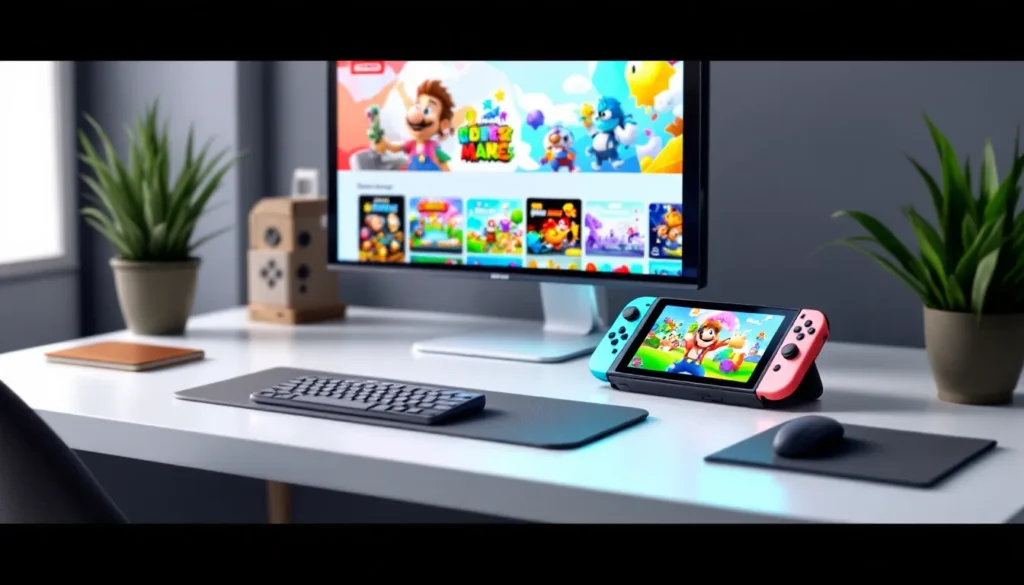
Nintendo’s reputation for quality often comes with a premium price tag, but the landscape has shifted dramatically in recent years. From full-fledged free-to-play titles on the Switch to mobile offerings and classic game libraries, players now have more options than ever to enjoy Nintendo’s ecosystem without spending a dime upfront. Whether someone’s looking to jump into competitive multiplayer, explore single-player adventures, or revisit retro classics, there’s a surprising amount of content available for free. This guide breaks down every legitimate avenue for accessing free Nintendo games across Switch, mobile, and classic platforms in 2026, cutting through the noise to highlight what’s actually worth downloading.
Key Takeaways
- Free Nintendo games are now widely available across Switch, mobile, and classic platforms through legitimate channels like the eShop, Nintendo Switch Online, and official mobile partnerships.
- Top free Nintendo Switch titles include Fortnite, Apex Legends, Pokémon Unite, and Rocket League for multiplayer, while single-player options like Pokémon Café ReMix and Fallout Shelter offer relaxing gameplay without aggressive monetization.
- Nintendo Switch Online ($19.99/year) provides access to over 100 NES and SNES classic games with modern features like save states and online multiplayer, making it exceptional value for retro gaming fans.
- Mobile free Nintendo games like Pokémon GO and Fire Emblem Heroes leverage gacha mechanics and in-game currency, but patient players can access substantial content without spending money.
- The eShop hosts over 500 free demos ranging from time-limited trials to generous content slices, allowing players to test games before purchasing and find niche multiplayer experiences beyond mainstream titles.
- Smart players maximize free Nintendo gaming by completing free battle pass tiers, hoarding premium currency for meaningful purchases, and leveraging family plan subscriptions to reduce costs per person.
Understanding Nintendo’s Free-to-Play Ecosystem
Nintendo entered the free-to-play market cautiously compared to competitors like Sony and Microsoft, but they’ve built a diverse ecosystem that spans multiple platforms. On Switch, the eShop hosts a growing collection of F2P titles, some developed by Nintendo, most by third-party studios. These games generate revenue through optional microtransactions, battle passes, or cosmetic purchases rather than upfront costs.
The company’s mobile strategy follows a different playbook. Nintendo partnered with developers like DeNA and Niantic to create smartphone games that leverage their IP while testing monetization models they wouldn’t typically use on console. Titles range from gacha-style experiences to simplified versions of console franchises, each tailored for touchscreen play and shorter session lengths.
A third pillar comes through Nintendo Switch Online, the subscription service that bundles online multiplayer with access to classic game libraries. While technically not free, the service costs $19.99 annually and offers enough retro content to appeal to budget-conscious players. The distinction matters: truly free games require no payment whatsoever, while NSO requires a recurring fee but delivers significant value for those already invested in online play.
Nintendo’s approach prioritizes brand protection over aggressive monetization. Players won’t find the predatory systems common in some mobile games, but they also shouldn’t expect the same depth as paid releases. Understanding these trade-offs helps set realistic expectations before downloading.
Best Free Nintendo Switch Games Available Right Now
Free-to-Start vs. Free-to-Play: What’s the Difference?
Nintendo uses the term “free-to-start” for games that offer limited initial content before requiring payment, think of them as extended demos with monetization. Pokémon Unite technically falls into free-to-play since all core gameplay remains accessible without spending, while something like the original Super Kirby Clash locked progression behind paywalls more aggressively.
The eShop doesn’t always make this distinction clear. True F2P games allow players to experience all content given enough time investment, even if purchases speed up progression or add cosmetics. Free-to-start titles hit hard barriers that require payment to continue. Checking user reviews before downloading saves frustration, players quickly call out which category a game actually falls into.
Top Free Multiplayer Games on Nintendo Switch
The multiplayer selection offers surprising depth for competitive players:
-
Fortnite remains the gold standard, with crossplay support across all platforms, regular content updates, and Zero Build mode for those tired of construction meta. Performance on Switch lags behind other consoles at 30fps, but the portable factor compensates for visual downgrades.
-
Apex Legends delivers fast-paced battle royale with hero abilities and tight gunplay. The Switch port runs better than early reviews suggested after several optimization patches, though serious players still gravitate toward PC or current-gen consoles for competitive advantage.
-
Pokémon Unite scratches the MOBA itch with simplified mechanics compared to League of Legends or Dota 2. Matches last 10 minutes, making it perfect for handheld sessions. The pay-to-win accusations from launch have lessened as the developers rebalanced progression, though dedicated players can still gain edges through held item upgrades.
-
Warframe brings its looter-shooter grind to Switch with full account cross-save. The learning curve intimidates newcomers, but no other free Switch game offers this much content, literally hundreds of hours of missions, crafting, and fashion frame customization.
-
Rocket League went free-to-play in 2020 and hasn’t looked back. Car soccer remains addictive whether playing casually or grinding ranked. The Switch version supports crossplay but runs at 60fps only when docked, dropping to 30fps in handheld mode.
Best Free Single-Player Experiences
Single-player free options skew more limited, but several stand out:
Fallout Shelter translates surprisingly well to Switch even though its mobile origins. Managing a vault offers dozens of hours of progression without forced ads or aggressive monetization. It’s perfect for players who want something relaxing between more intense games.
Tetris 99 comes free with Nintendo Switch Online membership. While technically behind the subscription paywall, it deserves mention as one of the most addictive takes on battle royale mechanics applied to puzzle gaming. The single-player component against CPU opponents offers practice, but the real draw is multiplayer.
Pokémon Café ReMix provides cozy puzzle gameplay without timers or energy systems that plague most free mobile puzzlers. It’s aggressively cute and surprisingly deep for matching mechanics, with regular events adding new Pokémon to recruit.
Most extensive single-player experiences still require purchases. Free offerings emphasize multiplayer or live-service models that keep players engaged long-term through events and seasonal content rather than traditional narrative campaigns.
Free Nintendo Mobile Games Worth Downloading
Nintendo’s mobile lineup experiments with their IP in ways console releases rarely do. Not all succeeded, but several remain genuinely worth playing:
Pokémon GO continues dominating as Nintendo’s most successful mobile venture even though being developed by Niantic. The AR walking game has evolved dramatically since 2016, adding PvP battles, raids, and seasonal events. While microtransactions exist, patient players access all content free by walking more and optimizing free daily items.
Super Mario Run launched as a premium mobile game with a free trial, then shifted models. Players get the first three worlds free, then hit a $9.99 paywall for the rest. The one-time purchase beats endless microtransactions, but it technically disqualifies from “fully free” status.
Fire Emblem Heroes embraces gacha mechanics fully. Players summon heroes using in-game currency (orbs) earned through missions or purchased with real money. The rates favor spenders, but skilled tacticians clear most story content with free units. According to reporting from gamerant.com, the game has generated over $1 billion in revenue, proving its monetization works even though complaints from F2P players about power creep.
Mario Kart Tour simplified the racing formula for touchscreens with decent results. The gacha system for unlocking drivers and karts frustrates anyone expecting a traditional Mario Kart experience. It’s worth downloading for nostalgia but lacks the depth that makes mainline entries special.
Dr. Mario World shut down in 2021, highlighting the risk of investing time in live-service mobile games. When servers close, players lose everything. Always check if a mobile Nintendo game requires online connectivity before committing serious time, offline titles have longer shelf lives.
Nintendo’s mobile output has slowed since 2020 as they refocus on Switch. Most new mobile releases now come from partner studios rather than in-house teams, and several older titles entered maintenance mode with minimal new content.
Nintendo Switch Online: Free Games with Your Subscription
Classic NES and SNES Games Included
The base Nintendo Switch Online subscription ($19.99/year or $3.99/month) includes libraries of NES and SNES titles that grow periodically. As of early 2026, over 100 games span both systems, from essentials like Super Mario Bros. 3 and The Legend of Zelda: A Link to the Past to deep cuts like Earthbound and Kirby’s Dream Land 3.
Each classic game includes quality-of-life features absent from original hardware: save states, rewind functions, and online multiplayer for supported titles. Playing Super Mario Bros. 3 co-op with a friend across the country wasn’t possible in 1988, but NSO makes it seamless. The suspend point feature lets players bookmark exact moments, perfect for challenging sections in games like Ninja Gaiden or Super Ghosts ‘n Goblins.
Nintendo adds games monthly, though the pace has slowed from launch. Recent additions focus on filling library gaps rather than dropping major releases, but surprises still happen. When Earthbound finally arrived after years of requests, it vindicated subscribers’ patience.
Expansion Pack Games and Value
The Expansion Pack tier ($49.99/year individual, $79.99/year family plan) adds N64, Genesis, and Game Boy Advance games plus DLC for select titles like Mario Kart 8 Deluxe and Animal Crossing: New Horizons. Whether it’s worth the premium depends heavily on individual gaming tastes.
N64 emulation launched rough with input lag and visual glitches, but updates have improved performance. Key titles include The Legend of Zelda: Ocarina of Time, Super Mario 64, Mario Kart 64, and Star Fox 64. For players who missed the N64 era or want portable versions, the value proposition strengthens.
Genesis games add variety outside Nintendo’s first-party catalog, with classics like Sonic the Hedgehog 2, Streets of Rage 2, and Phantasy Star IV. The GBA library remains smaller but includes The Legend of Zelda: The Minish Cap and Mario & Luigi: Superstar Saga.
The DLC alone can justify the upgrade for active players. Mario Kart 8 Deluxe‘s Booster Course Pass adds 48 remastered tracks, a $24.99 value if purchased separately. Animal Crossing players get access to the Happy Home Paradise DLC, another $24.99 standalone purchase. Players actively using these games essentially get the classic libraries as a bonus.
How to Access Free Trials and Limited-Time Offers
Nintendo runs periodic promotions that smart shoppers leverage for extended free play:
New console bundles sometimes include trial codes for Nintendo Switch Online. Checking the box carefully before activating paid subscriptions can net an extra week or month of service. These codes often have expiration dates, so using them immediately prevents waste.
Partner promotions through Twitch Prime (Amazon Prime Gaming) occasionally offer NSO trials or in-game currency for F2P titles. Linking Nintendo and Amazon accounts takes minutes and has provided everything from Tetris 99 tickets to Fortnite V-Bucks packs over the years. Checking the Prime Gaming page monthly catches these before they expire.
Game-specific trials let players test online features before committing. When major multiplayer titles launch, Nintendo sometimes offers weekend-long free access to NSO for that specific game. Splatoon 3 and Mario Kart 8 Deluxe both received this treatment around major updates.
The eShop’s “Coming Soon” section lists upcoming releases with demo plans. Following nintendolife.com or setting eShop wishlist alerts ensures players don’t miss limited-time trial windows. Some demos remain available permanently, while others vanish after launch windows close.
Family Group sharing offers another angle. A single family plan ($34.99/year for base NSO, $79.99/year for Expansion Pack) covers up to eight Nintendo Accounts. Splitting costs among friends or actual family members drops individual expense dramatically, less than $10/year per person for the Expansion Pack when fully utilized.
Legal Ways to Play Retro Nintendo Games for Free
The retro gaming scene exists in a legal gray area, but several legitimate options let players experience classic Nintendo titles without piracy:
Nintendo Switch Online remains the most straightforward legal avenue, covered above. For players specifically chasing retro experiences, it’s the primary option Nintendo endorses.
Official emulators and re-releases sometimes go free temporarily. Nintendo occasionally offers classic games through promotions tied to new releases. When The Legend of Zelda: Link’s Awakening remake launched on Switch, Nintendo briefly promoted the Game Boy original through NSO to build hype.
Players who own original cartridges can legally create Nintendo 64 ROM backups for personal use, though the technical and legal nuances get complicated quickly. Downloading ROMs from the internet, even for games someone owns physically, technically violates copyright in most jurisdictions. The legality of emulation itself remains settled, it’s legal, but acquiring game files walks a fine line.
Homebrew and fan projects occasionally get Nintendo’s blessing, though more often they receive cease-and-desist letters. The company aggressively protects IP, making any unofficial project risky. Players should assume fan remakes or unofficial ports could vanish at any moment.
The most reliable free retro gaming happens through official channels. While the selection remains limited compared to the full Nintendo back catalog, the peace of mind and convenience factor outweigh the limitations for most players. Those seeking deeper retro libraries should explore services like NSO rather than sailing into legally questionable waters.
Free Game Demos and Trial Versions on the eShop
The Nintendo eShop hosts over 500 free demos as of early 2026, from indie darlings to AAA releases. These demos range from time-limited trials to generous content slices that offer hours of gameplay.
Finding demos efficiently requires knowing the eShop’s quirks. The dedicated “Demos” section lives buried in menus rather than prominently featured. Searching “demo” directly pulls up the full list faster than navigating category trees. Sorting by “Newest Arrivals” highlights recent additions, while “Best Sellers” surfaces demos for popular games.
Some demos impose time limits, typically 30 minutes to an hour of gameplay, while others restrict progress to early chapters or levels. Games like Octopath Traveler offered three-hour demos with save transfer to the full game, essentially functioning as extended trials. Other titles like Dragon Quest XI S provided 10+ hours of demo content, enough to determine whether the JRPG grind appeals before purchasing.
Indie showcases frequently coincide with demo drops. Nintendo’s Indie World presentations often make dozens of demos available simultaneously for limited windows. Following twinfinite.net during these events helps players catch time-sensitive trials before they’re pulled.
Demos with save data transfer deserve priority. Knowing progress carries to the full version removes the sting of restarting if the purchase happens later. Checking store pages for this feature before investing hours prevents frustration.
Strategy games and roguelikes tend to offer the most generous demos since their gameplay loops depend on replayability rather than narrative surprises. Games like Slay the Spire or Into the Breach let players experience full runs in demo form, providing genuine value even without purchasing.
Maximizing Your Free Gaming Experience on Nintendo Platforms
Managing In-Game Purchases and Microtransactions
Free games monetize through microtransactions, but smart players maximize enjoyment without spending:
Battle passes in games like Fortnite offer free tiers alongside premium tracks. Completing free tiers provides cosmetics and currency, though at a slower pace than paying. Prioritizing daily and weekly challenges accelerates progress without spending a dime. Some games like Apex Legends periodically refresh free rewards, making patience more rewarding than impulse purchases.
Premium currency from events and login bonuses accumulates over time. Hoarding this currency for meaningful purchases, character unlocks or functional items rather than cosmetics, stretches its value. In Pokémon Unite, saving tickets for held item upgrades impacts gameplay more than spending on Holowear skins.
Spending alerts prevent accidental purchases, especially important when kids access accounts. The Switch lets users set purchase restrictions through parental controls, requiring passwords for eShop transactions. Enabling this takes five minutes and prevents costly mistakes.
Daily login rewards in mobile games like Fire Emblem Heroes add up significantly over months. Missing days costs more than players realize, cumulative bonuses often spike on days 7, 14, and 30. Setting phone reminders for daily check-ins maximizes free currency intake with minimal time investment.
Finding Hidden Gems in the Free Section
The eShop’s free section contains buried treasure beyond obvious F2P titans:
Niche multiplayer games like Naraka: Bladepoint or Rogue Company lack Fortnite’s player counts but offer distinct gameplay. Third-person melee combat or tactical shooters appeal to players burned out on battle royale formulas. Smaller communities often prove friendlier to newcomers than mega-hit sweatfests.
Regional exclusives sometimes appear in the eShop depending on account location. Japanese accounts access different free titles than North American ones. Creating a secondary account set to different regions costs nothing and opens access to games that never received western releases. Language barriers limit some experiences, but many games transcend text through universal gameplay.
Publisher-specific promotions rotate through the eShop seasonally. Big publishers like Capcom or Bandai Namco occasionally make older titles free temporarily to promote franchise anniversaries or new releases. Following publisher social media catches these before they expire.
Cross-save titles deserve special attention for players who game across multiple platforms. Fortnite, Apex Legends, and several others let players continue progress whether on Switch, PC, or console. This flexibility maximizes time investment across devices, grinding challenges on PC at higher framerates, then playing casually in handheld mode later.
Conclusion
The free Nintendo gaming landscape in 2026 offers far more variety than skeptics expect. From competitive multiplayer on Switch to mobile spin-offs and classic game libraries through NSO, players have legitimate options for diving into Nintendo’s ecosystem without upfront costs. The quality varies, some F2P titles deliver hundreds of hours of engagement while others feel like shallow cash grabs, but careful curation separates worthwhile experiences from time-wasters.
The key lies in setting realistic expectations. Free games won’t replace premium first-party releases like the next Mario or Zelda, but they fill different niches: quick multiplayer sessions, mobile gaming on commutes, or nostalgic retro binges. Smart players leverage subscriptions like NSO for maximum value, stay alert for limited-time trials, and approach microtransactions with skepticism rather than impulse.
As Nintendo continues expanding their F2P offerings and digital services, the opportunities for budget-conscious gaming will only grow. Staying informed about new releases, eShop promotions, and subscription benefits ensures players never run out of quality free content across Nintendo’s platforms.