
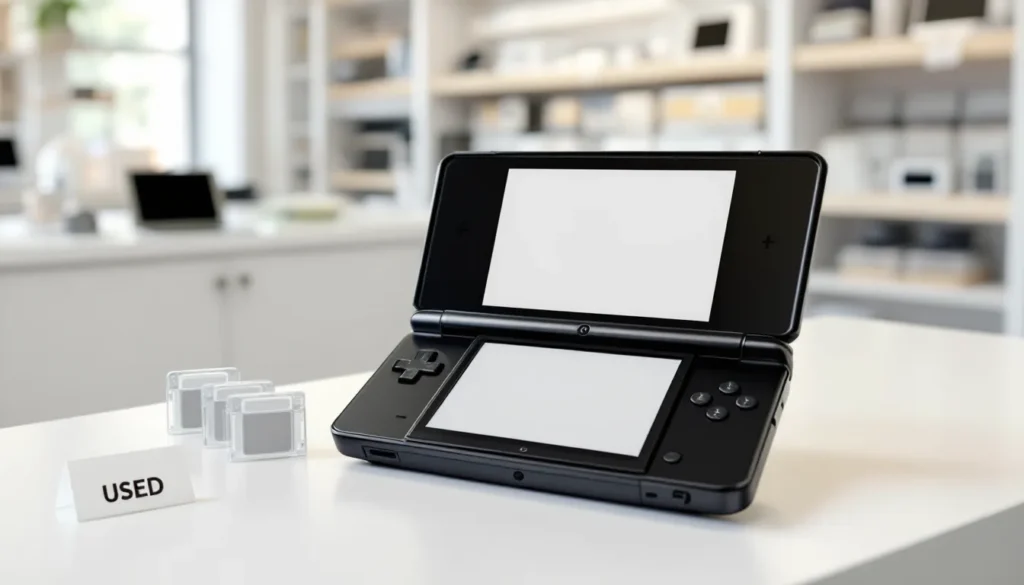
The Nintendo DS might’ve released over two decades ago, but in 2026, it’s experiencing a serious comeback among retro collectors and budget-conscious gamers alike. Whether you’re hunting down childhood nostalgia or exploring what many consider Nintendo’s golden era of handheld gaming, finding a DS for sale isn’t as straightforward as it used to be. Prices fluctuate wildly depending on condition and model, sellers range from trustworthy to sketchy, and knowing what to look for can mean the difference between scoring a pristine device or getting stuck with a brick.
This guide cuts through the noise. You’ll learn which DS model suits your needs, where to find the best deals in 2026, what prices are actually fair, and how to inspect a used console like a pro before handing over cash. Let’s get into it.
Key Takeaways
- Nintendo DS for sale has surged in demand among retro collectors in 2026, with the DS Lite offering the best balance of price ($50-75), performance, and access to 3,000+ games including GBA titles.
- Inspect hinge condition, screen quality, button responsiveness, and battery functionality before purchasing a used Nintendo DS, as these are the most common failure points that affect long-term usability.
- Shop across multiple platforms—eBay, Facebook Marketplace, r/GameSale, and local thrift stores—to find competitive pricing, with loose consoles ranging from $25-45 for original models to $80-150+ for limited editions.
- Verify authenticity by examining cartridge labels, fonts, and circuit boards for counterfeit games, and always use buyer-protected payment methods to avoid scams when purchasing online.
- The DS Lite remains the superior choice over the DSi for most buyers due to Game Boy Advance backward compatibility, extensive aftermarket support, and significantly lower cost compared to upgrading to a 3DS.
- Include essential accessories like a carrying case, screen protectors, extra styluses, and replacement batteries to enhance your Nintendo DS experience and protect your investment.
Why the Nintendo DS Still Matters in 2026
The DS library remains one of the strongest in handheld gaming history. Over 1,800 games released across its lifespan, spanning genres that still hold up today, Pokémon HeartGold/SoulSilver, Chrono Trigger, The World Ends With You, Advance Wars: Dual Strike, and countless others that haven’t been ported or remastered.
There’s also the backward compatibility factor. Every DS model plays the entire Game Boy Advance library, giving you access to another ~1,500 games. That’s over 3,000 titles on a single device, many of which are dirt cheap to collect compared to Switch or modern console games.
The form factor hasn’t aged either. The clamshell design protects both screens during transport, battery life still clocks in at 8-12 hours depending on model, and the device fits comfortably in a pocket. For travel gaming or commutes, the DS remains hard to beat in 2026.
Finally, there’s the price argument. A decent used DS costs a fraction of what you’d pay for a Switch Lite, and games average $10-30 instead of $40-60. If you’re building a retro collection or just want solid portable gaming on a budget, the DS delivers serious value.
Understanding the Different Nintendo DS Models
Original Nintendo DS (2004)
The original “phat” DS is the bulkiest and least desirable model in 2026. It’s chunkier than later revisions, the screens are dimmer, and battery life maxes out around 6-10 hours. The stylus placement is awkward, and the overall build quality feels dated compared to the Lite.
That said, it’s usually the cheapest option. If you’re on an extreme budget and don’t mind the bulk, a working original DS can run as low as $25-40 loose. Just know you’re sacrificing comfort and screen quality.
One quirk: the original DS has a dedicated slot for Game Boy Advance cartridges that protrudes from the bottom. It’s functional but aesthetically clunky, and dust can accumulate in the exposed slot.
Nintendo DS Lite (2006)
This is the sweet spot for most collectors. The DS Lite fixed nearly every complaint from the original, brighter screens with four adjustable brightness levels, slimmer profile, better build quality, and improved button feel. Battery life also jumped to 9-14 hours depending on brightness settings.
The Lite comes in the widest variety of colors and special editions, from basic black and white to limited runs like the Zelda Gold or Metallic Rose. These special editions command premium prices but look sharp on a shelf.
One weakness: the hinge. DS Lites are notorious for hinge cracks, especially around the right side. Always inspect this area closely before buying. A cracked hinge doesn’t always kill functionality, but it’s a red flag for future failure.
Nintendo DSi and DSi XL (2008-2009)
The DSi dropped GBA backward compatibility in exchange for dual cameras, an SD card slot, built-in software, and access to the DSiWare digital shop (which Nintendo shut down in 2017, rendering that feature mostly useless now). Screens are slightly larger than the Lite, and the matte finish feels more premium.
The DSi XL (called DSi LL in Japan) bumps screen size up to 4.2 inches, making it the best option for older gamers or anyone with vision issues. The larger screens look incredible for DS games, though some GBA titles, oh wait, those don’t work here. That’s still the deal-breaker for many collectors.
In 2026, DSi models typically cost $10-20 more than a comparable Lite. Unless you specifically want the larger screens or camera features, most buyers still lean toward the Lite for its GBA support.
Where to Find Nintendo DS Consoles for Sale
Online Marketplaces and Auction Sites
eBay remains the go-to for DS consoles in 2026. Search filters let you sort by model, condition, and price, and seller ratings help you avoid scammers. Auctions can net you deals if you’re patient, but Buy It Now listings offer more certainty. Always check photos closely, many sellers use stock images instead of actual device shots.
Mercari and Facebook Marketplace have exploded for retro gaming sales. Prices tend to run slightly lower than eBay since there’s less seller competition, and local pickup options let you inspect before buying. The downside? Less buyer protection if something goes wrong.
r/GameSale on Reddit is a solid community marketplace. Sellers typically post timestamped photos, and the community moderates aggressively to keep scammers out. Prices are fair, and negotiation is expected. Just use PayPal Goods & Services for transaction protection.
Retro Gaming Specialty Stores
Stores like GameStop (yes, they still exist in 2026) occasionally stock used DS systems, though selection varies wildly by location. Expect to pay slightly above market rate, but you get a 30-day warranty that online marketplaces don’t offer.
Dedicated retro gaming shops, both online and brick-and-mortar, curate their inventory better than general resellers. Shops like DKOldies, Lukie Games, and regional chains test their systems before listing. You’ll pay a premium for this peace of mind, typically 15-25% above eBay prices, but the condition is usually solid.
Many enthusiasts trust hardware reviews from TechRadar when evaluating refurbished retro consoles, as their buying guides often compare quality across different sellers.
Local Options: Thrift Stores, Garage Sales, and Pawn Shops
Thrift stores like Goodwill and Salvation Army occasionally score DS systems, though it’s pure RNG. You might find a pristine Lite for $15, or you might strike out for months. Always test on-site if possible, many thrift stores now have charging stations.
Garage sales and estate sales are goldmines if you’re willing to hunt. Older sellers often don’t know current market values and price systems at $10-20 to move inventory quickly. Weekends in suburban areas yield the best results.
Pawn shops sit somewhere in between. They test electronics before accepting them, so you’re less likely to buy a broken unit, but prices reflect that assurance. Expect to pay closer to online marketplace rates, though negotiation is always an option.
What to Expect: Current Nintendo DS Pricing in 2026
Loose Console Prices by Model
Pricing fluctuates based on condition, color, and regional availability, but here’s what you should expect for loose consoles (no box, minimal accessories) in working condition as of early 2026:
- Original DS: $25-45 depending on color and wear
- DS Lite (common colors): $50-75 for clean units, $35-50 for heavy wear
- DS Lite (limited editions): $80-150+ depending on rarity
- DSi: $60-85 for standard models
- DSi XL: $80-110, with certain colors like Burgundy commanding slight premiums
Japanese imports often run $10-20 cheaper than North American models, and they’re region-free for DS games (though GBA games are region-locked). If you don’t mind Japanese system menus, imports are solid value.
Complete and Boxed Systems
Complete-in-box (CIB) DS systems with original packaging, manuals, and all inserts fetch significantly higher prices among collectors:
- Original DS CIB: $80-120
- DS Lite CIB (common): $120-180
- DS Lite CIB (limited editions): $200-400+
- DSi CIB: $130-200
- DSi XL CIB: $180-280
Mint, sealed systems are collector territory and can run 2-3x these prices. Unless you’re a serious collector or investor, buying sealed makes little practical sense, you’re paying a massive premium for shrinkwrap.
Graded systems (WATA or VGA) have entered the DS market but remain niche. Avoid graded consoles unless you’re specifically collecting for investment purposes. For players, grading is a waste of money.
How to Inspect a Used Nintendo DS Before Buying
Testing Both Screens for Dead Pixels and Yellowing
Boot the system and load a game that displays solid colors, white, black, red, blue. Examine both screens carefully under good lighting. Dead pixels appear as tiny black or stuck-colored dots that don’t change. One or two dead pixels on the edges aren’t deal-breakers, but clusters or central dead pixels ruin the experience.
Yellowing is common on older DS Lite units, especially white models. The plastic oxidizes over time, turning cream or yellow. It’s cosmetic and doesn’t affect functionality, but it’s a legitimate negotiation point. Heavily yellowed systems should cost 15-20% less than clean ones.
Screen protectors can hide scratches. If the seller applied one, ask them to remove it before purchase so you can inspect the actual screen surface. Scratches on the bottom touchscreen are more common and more problematic than top screen damage.
Checking Hinge Condition and Structural Integrity
The hinge is the DS’s Achilles’ heel, especially on the Lite. Open and close the system several times, listening for cracking sounds. Inspect the outer hinge housing for hairline cracks, start on the right side, where failures occur most often.
Gently wiggle the top screen while open. Excessive wobble indicates worn hinge pins. Some play is normal after 15+ years, but the screen shouldn’t flop around loosely.
Check the shell for cracks near screw posts and along seams. Cracks here suggest the system was dropped or opened by someone who didn’t know what they were doing. These units often have deeper internal damage.
Verifying Button Responsiveness and Touchscreen Accuracy
Test every button multiple times. D-pad directions should register cleanly without sticking or double-inputs. Face buttons (A, B, X, Y) should click satisfyingly and respond on every press. Shoulder buttons (L, R) are critical for many games, press them repeatedly to ensure they don’t stick or miss inputs.
For the touchscreen, use the DS’s built-in Pictochat application (found on all models) to scribble across the entire surface. Pay special attention to edges and corners where digitizer failure is most common. If calibration feels off, you can recalibrate in system settings, but severe inaccuracy suggests hardware failure.
Test the microphone if buying a DSi or DSi XL. Some games (like Zelda: Phantom Hourglass) require mic input. Blow gently into the mic while in Pictochat to see if it registers.
Battery Life and Charging Port Functionality
Original DS batteries are 20+ years old now. Battery degradation is expected. Ask the seller about current battery life, and if possible, verify it holds a charge for at least 4-5 hours. Replacement batteries cost $8-15 on Amazon and are easy to install, so degraded battery life shouldn’t kill a deal, just factor replacement cost into your offer.
Inspect the charging port for bent or corroded pins. Plug in the charger (bring your own if buying locally) and verify the orange charging light appears. Wiggle the cable gently, if the light flickers, the port may be damaged.
Third-party chargers work fine and cost $6-10, but official Nintendo chargers are preferred if available. Make sure the seller includes some charger, buying one separately eats into your budget.
Essential Accessories to Look for When Buying
A bare-bones DS is functional, but these accessories significantly improve the experience:
-
Stylus: The included stylus is easy to lose. Check that one’s included, and consider buying a 3-pack of replacements ($5-8) immediately. Aftermarket styluses are hit-or-miss on build quality.
-
Carrying case: Protects screens and prevents hinge damage during transport. Hard-shell cases are best. Official Nintendo cases run $10-15 used: third-party options are cheaper but less durable.
-
Screen protectors: Essential for the touchscreen. Apply a tempered glass or plastic protector as soon as you get the system. Hori makes excellent DS screen protectors that are still available.
-
GBA slot cover (DS Lite): The Game Boy Advance slot on the Lite needs a cover to prevent dust intrusion. Many used units are missing this tiny piece. Replacements cost $3-5 on eBay.
-
Charger: As mentioned earlier, verify you’re getting one. Third-party USB charging cables exist for DSi models and work surprisingly well for travel.
-
Extra battery: If you’re a heavy user, grab a spare battery. Swapping batteries mid-trip is faster than waiting for a charge, and it extends the system’s practical lifespan.
Sellers who include multiple accessories, case, games, extra stylus, etc., often price bundles better than piecing things out separately. Bundles on platforms mentioned in Tom’s Guide buying recommendations often represent better value than buying components individually.
Top Nintendo DS Games Worth Collecting Alongside Your Console
Buying a DS without games is like buying a console without a memory card, you’re only halfway there. These titles represent the best the system offers and are still reasonably priced in 2026:
RPGs:
- Pokémon HeartGold/SoulSilver ($80-120 loose, watch for fakes)
- Chrono Trigger ($40-60)
- Dragon Quest IX ($25-40)
- The World Ends With You ($30-50)
- Radiant Historia ($45-70)
Action/Adventure:
- The Legend of Zelda: Phantom Hourglass ($20-30)
- The Legend of Zelda: Spirit Tracks ($25-40)
- Castlevania: Dawn of Sorrow ($25-35)
- GTA: Chinatown Wars ($15-25)
Puzzle/Strategy:
- Professor Layton series (all six entries, $15-25 each)
- Advance Wars: Dual Strike ($20-30)
- Picross DS ($15-25)
- Tetris DS ($25-40)
Platformers:
- New Super Mario Bros. ($15-25)
- Kirby Super Star Ultra ($25-35)
- Yoshi’s Island DS ($20-30)
Prices above reflect loose cartridges in good condition. CIB copies cost 50-100% more depending on the title. Watch for reproductions on high-value games like Pokémon, we’ll cover that in the next section.
For those interested in exploring the broader Nintendo ecosystem and current releases, Nintendo Life provides comprehensive coverage of the entire Nintendo library, including retrospectives on classic DS titles.
Avoiding Scams and Counterfeit Systems
The retro market attracts scammers. Here’s how to protect yourself:
Counterfeit games are rampant, especially for Pokémon titles. Look for these red flags on DS cartridges:
- Label quality: Fakes often have blurry text or incorrect fonts
- Cartridge color: Authentic DS carts are usually gray or black: fakes sometimes use wrong plastics
- Nintendo logo: Should be clean and evenly printed, not fuzzy
- Weight: Repro carts feel lighter than authentic ones
When buying online, ask sellers for photos of the cartridge’s back and circuit board (visible through the label gap). Authentic boards have specific markings: Google the game + “authentic vs fake” for comparison guides.
Counterfeit systems are rare but exist, mostly targeting limited editions. Original packaging inconsistencies, wrong serial number formats, and mismatched fonts are giveaways. If a deal seems too good to be true on a rare model, it probably is.
Common seller scams:
- “For parts/not working” systems listed in working condition sections
- Stock photos instead of actual item photos
- Descriptions claiming “untested” when the seller knows it’s broken
- Charging premium prices for “refurbished” systems with cheap aftermarket shells
Protect yourself:
- Use payment methods with buyer protection (PayPal G&S, credit cards)
- Check seller ratings and feedback thoroughly
- Ask questions before buying: sketchy sellers dodge specifics
- Request additional photos if listings use stock images
- For local deals, always test before handing over cash
If you receive a broken or fake item, document everything with photos and videos, then file a dispute immediately. Most platforms side with buyers if you have evidence.
Should You Buy a Nintendo DS or Upgrade to 3DS?
The Nintendo 3DS family (3DS, 3DS XL, New 3DS, 2DS) plays all DS games natively, making it technically the “better” purchase for versatility. You get access to both libraries, DS and 3DS, plus Virtual Console titles and eShop exclusives (though the eShop closed in 2023).
Here’s when the 3DS makes more sense:
- You want to play 3DS exclusives like Fire Emblem Awakening, Kid Icarus: Uprising, or Pokémon X/Y
- You prefer larger screens (XL models)
- You value better hardware: improved processors, C-stick on New 3DS models, better battery life
- You don’t care about GBA backward compatibility (3DS doesn’t support GBA carts)
Here’s when the DS is the better call:
- Budget is tight (DS consoles cost 40-50% less than comparable 3DS models in 2026)
- You specifically want GBA cartridge support
- You prefer the smaller form factor of the DS Lite
- Your game library focus is DS-era titles, not 3DS
- You’re building a collection and want original hardware for authenticity
Pricing comparison: A good condition DS Lite runs $50-75. A comparable 3DS or 2DS costs $120-160. That’s a significant gap if you’re primarily interested in DS gaming.
Bottom line: If you already own a 3DS, there’s little reason to buy a DS unless you want GBA support or collect hardware. If you’re starting fresh and your budget allows, the 3DS is the more versatile investment. But if you’re specifically hunting DS nostalgia on a budget, the DS Lite remains the perfect entry point in 2026.
Conclusion
The Nintendo DS market in 2026 offers solid value for retro collectors and budget gamers willing to do their assignments. Focus on the DS Lite for the best balance of price, features, and build quality. Shop across multiple platforms, eBay, Facebook Marketplace, local game stores, to find competitive pricing. Always inspect thoroughly before buying, paying special attention to hinges, screens, and button responsiveness.
Prices range from $25 for beat-up original models to $150+ for pristine limited editions, with the sweet spot around $50-75 for a quality DS Lite. Factor in accessory costs and at least a few games to get the full experience. And if you’re patient, local thrift stores and garage sales can still yield incredible deals if you’re willing to hunt.
The DS library isn’t going anywhere, and neither is the community keeping these systems alive. Whether you’re replaying childhood favorites or discovering classics for the first time, a well-chosen DS purchase delivers hundreds of hours of quality gaming without very costly.